



In the summer of 1984, I was 22, working in NYC and living at my parents’ apartment. At a bar one evening, I met a 27-year-old woman named Debby (not my wife). We had a mutual attraction, we kissed, and in the course of that evening I lied about my age and claimed that I, too, was 27. Five years older than I actually was, a big difference of almost 25%.
We went on a handful of dates. I’d pick Debby up at her apartment where I met her five-year-old son. He was very cute. He was learning to be fluent in French at the Fleming School on East 62nd Street.
I didn’t have the courage to confess my true age to Debby. My answers to her questions about my past were vague and false. I’m pretty sure she knew I was lying. For one thing, she never allowed the romantic side of our relationship to advance.
After about a month, she said she wanted to see where I lived, a matter I had tried to cloud in mystery. I was in luck. My parents’ apartment was under renovation and my mother and father had just moved out for the summer to their house in New Jersey to avoid the racket and dust.
This, perhaps, was my opportunity to advance the relationship. But when I gave Debby a tour of “my bachelor pad” six bedroom Park Avenue apartment, I did not make the impression I’d aimed for.
She said something like, “David, tell me the truth, where are your parents?” I doubled down on my lie and said something like “It’s a very sad story and it upsets me to talk about it.” I was trying to convey, without success, the plight of an orphan, a sole survivor of some tragic peril.
That was the end of Debby and me. I still feel guilty about misleading her, a sweet woman with a young child. In recalling my unfortunate behavior I recall how my initial lie grew and grew.
London Falling
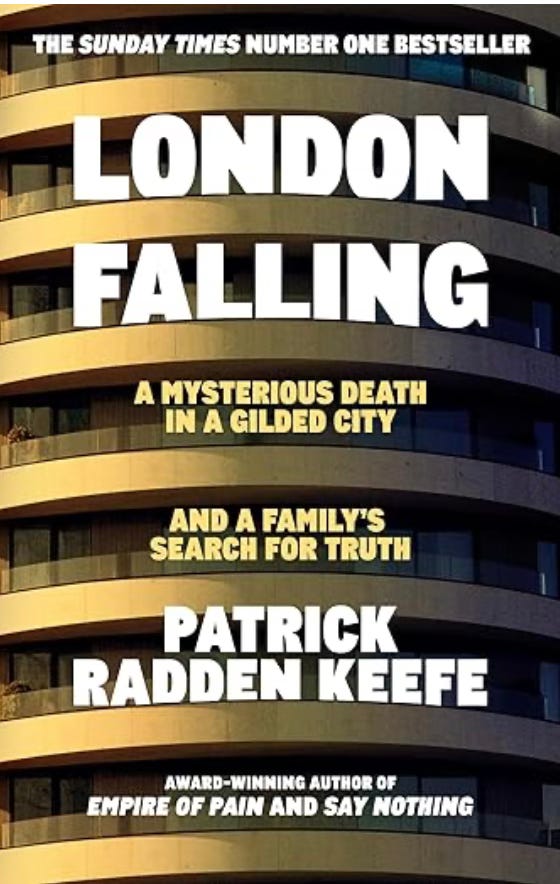
Lying is on my mind as I’ve just read Patrick Radden Keefe’s new book London Falling.
It’s a true story about the 2019 death of a 19-year-old named Zac who assumed an elaborate false identity and pretended to be the son of a billionaire Russian oligarch. Zac came from an ordinarily affluent family. But from an early age, he became obsessed with the extravagant flash of the lifestyles of the new Russian oligarch money and the associated “glitzy, aspirational culture of modern London.” 1
Zac was a talented and detail-oriented liar and his lies were mostly believed. As Keefe puts it:
“[Zac] came to understand something about the essential gullibility of human nature. Most of us have a default setting to believe other people.” 2
Zac’s fake persona and his obsession with the outward glitter of wealth led him to fall in with the dark side of London––gangsters and fraudsters. In particular, two older men who stole and cheated and extorted in order to grasp some of the Russian oligarch money that was flowing into the London economy.
These oligarchs and their money were of shady provenance but they were welcomed by a “morally elastic” British establishment that was willing to look the other way when it came to criminal behavior associated with wealthy Russians.
Zac was attracted to that dark side. As one of Keefe’s mobster interviewees put it, many people have a temptation to “flirt with a little bit of criminality.” To be “Saturday Night Gangsters.” 3
Eventually, Zac’s lies caught up with him. At the apartment of his London mobster “friend,” one late, winter night in 2019, Zac jumped off a fifth-floor balcony and fell to his death in the Thames River. Zac’s mobster friend was at home in the apartment. He was never apprehended and may have been a police informant.
Keefe does a masterful job of investigating all the threads, all the personal histories and stories that led to that tragic night. We get to know the gangsters and the fraudsters as well as Zac’s grieving and guilt-wracked parents. As a reader, you’re left to judge for yourself the what and why of Zac’s death. Suicide or desperate attempt to escape?
Hindsight bias strikes again
As a parent, when your teenager or young adult child seems to be headed off course, you want to intervene. But you also fear that your interference might trigger your child to shut off all communications or perhaps go into self-exile, thereby eliminating your remaining parental influence. It’s why countries at war keep channels of communication open to keep alive the prospect of peace.
While I was reading London Falling, however, I felt my parental hindsight bias at work. I judged Zac’s parents harshly. It was similar to my initial harsh judgment of Belle Burden in reading her memoir Strangers, which starts with the sudden destruction of her marriage and then goes back to the beginning of that relationship. Couldn’t she see the obvious red flags? 4
Similarly, as I read London Falling, I was harshly judging Zac’s parents. They seemed willfully ignorant, obtuse, and over the top, gentle-permissive in their parenting. Clearly, their son was lying to them. Clearly, he had an unhealthy relationship with the flash of wealth––the cars and the apartments and the members’ clubs. Clearly, he was involved in activities inappropriate for a nineteen-year-old.
But just like with Strangers, I knew the tragic ending. So, of course everything seemed clear. That’s how hindsight bias clouds our judgment.
A little humility is in order
I was fooled by a false identity.
Around 2006 I was introduced by my good friend Irwin to a father who had kids in the private school where Irwin was the headmaster. That man was Josef von Habsburg, a descendant of the royal von Habsburg family. I was starstruck. Irwin knew what a history nerd I was, and the von Hapsburgs were hugely important figures in the European history I’d always loved to read about.
Josef von Habsburg spoke with a wistful, polished, and faintly Germanic accent. He dropped names with great finesse. Apparently. the Shah of Iran’s family and the von Hapsburgs were very tight, hanging out together wherever former royals gathered to talk about the good old days.
I learned from Irwin that Josef had made generous charitable donations to Irwin’s school in addition to his children’s tuitions.
Josef was very strange but his strangeness only added to my belief in him. He came to a party at our apartment wearing an oversized gun holster loaded with a portable hairdryer. Only an eccentric royal could get away with that.
My wife Debbie and I went to Josef’s apartment for dinner one night. His pregnant wife was a designer, and the apartment, a vast loft in Soho, was crammed with colorful chandeliers and expensive looking furniture. You could get lost in the alleyways. It was part fairyland, part flea market, part showroom.
That night, we met Josef’s children who were dressed in a bizarre blend of lederhosen and tuxedos. We met his two greyhounds. I wish I could remember the names of the kids and the pets. Wolfie? Fritz? We saw pictures of Josef’s family castle where he and the family were headed when school let out for the summer. They served us food that was inedible. Gristly meat, I recall.
The penny drops
In 2009, Josef came to see me at my office. He was in tears because all his money had been held at Lehman International in London. Lehman went bankrupt in ’08, and Josef had been told his London money was irretrievable. All of it lost. I remember thinking that here in front of me was a “broken man.”
He didn’t ask me for money but he did ask if I could help him with a venture in China that he hoped would restore his fortune. I referred him to someone I knew who did business in China.
Sometime soon after, it was revealed that Josef von Hapsburg was really Josef Meyers from Michigan. Josef was wanted for failure to pay child support to another family he had in Michigan. Also, Josef was a confidential informant, a CI, for the FBI.
Josef’s “job” as a CI was to hunt for people on the margins of Wall Street, strivers who might be easily susceptible to the lure of a fast buck via white-collar crime. Josef worked with an undercover FBI agent to set up his targets. Usually, the sting involved laundering briefcases of cash.5
In the meantime, the FBI was paying for Josef to maintain the lifestyle and thus the identity of a fabulously wealthy royal. Plus, whenever Josef himself was arrested for his own white-collar crimes, the FBI would step in to make the charges go away.
A Detroit newspaper broke the news that Josef was an imposter. He was extradited to Michigan from New York and sentenced to three and a half years in prison for failing to pay child support.
Our default setting
By the time I met Josef, I was likely too much in the mainstream of finance to be a typical victim of his. But given more time, he might have tried to turn me into one of his marks. Certainly, without his unmasking, I would have gone on believing and enjoying the fact that I was becoming friends with a genuine von Hapsburg.
As Keefe writes in London Falling, my “default setting” is to believe people when they tell me who they are. Especially if it seems that they have nothing to gain by lying. Perhaps that’s naive.
Part of me admires von Hapsburg for his elaborate con. Getting the FBI to pay him a lot of money, living a princely life, fooling everyone. A seeming mastermind of the world of the “nether shadowland,” just like the world that Zac entered in London Falling. A “shadowland” that can seem enticing precisely because it is illicit, forbidden.6
So, reading London Falling, I understood Zac’s attraction to the world of flash and gangsters. And with a few days’ perspective, I understand the unfairness of my initial, harsh judgments of Zac’s parents.
As I like to remind myself, the past carries an aspect of immutable inevitability. We tend to believe that things could have only turned out as they did because that’s the only way they turned out.
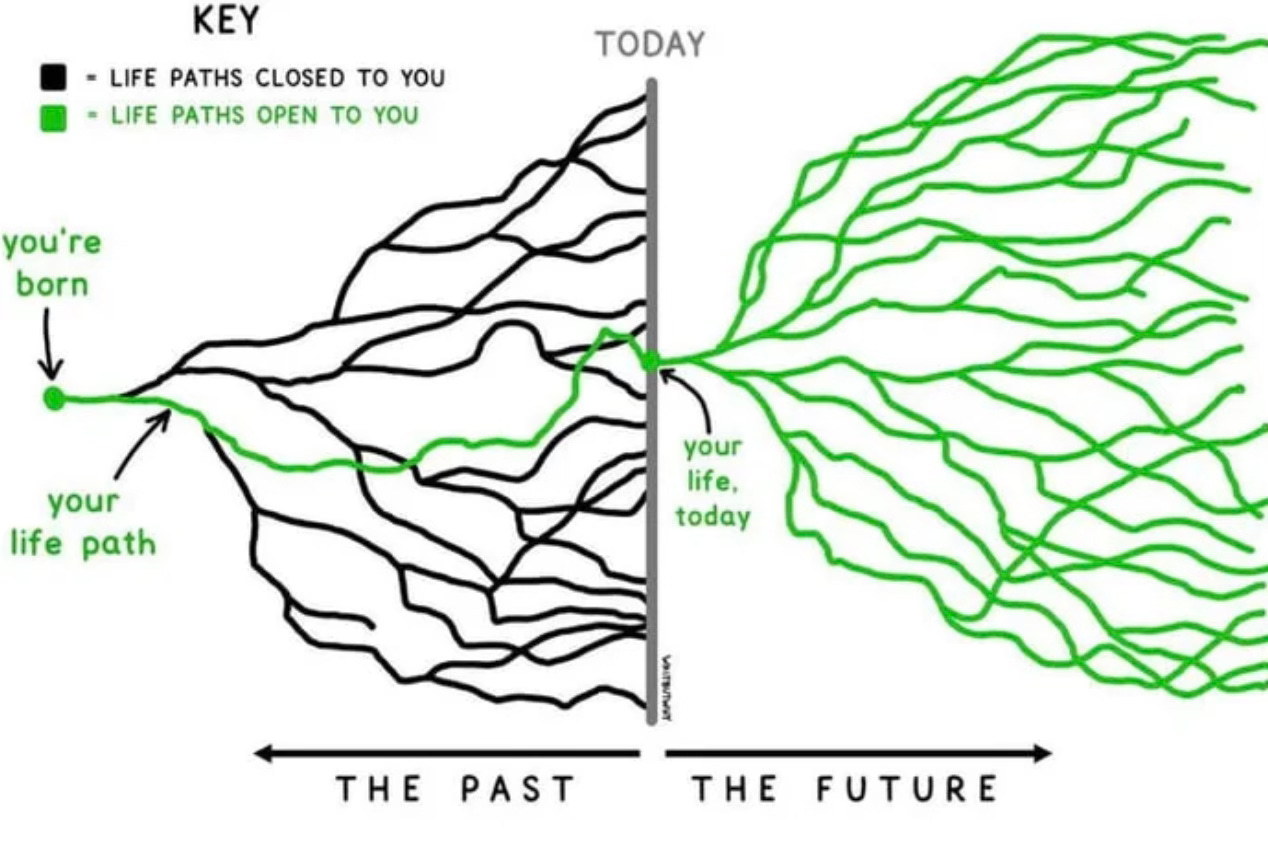
But every event in the past used to be in the future, subject to infinite different outcomes. It takes mental effort to remember this. It’s worth the effort because it allows us to understand the past far better.
And with that understanding comes compassion for those who are deceived, like the parents in London Falling who lost their son Zac.
Question for the comments: Have you ever been bamboozled by a fake as I was and have you ever lied as I did about your age or backstory?
In this clip from Catch Me If You Can, con man Frank (Leonardo DiCaprio ) evades FBI agent Hanratty (Tom Hanks) by pretending to be a pilot and using a phalanx of beautiful stewardesses to surround him and divert attention.
London Falling; Patrick Redden Keefe.
London Falling.
London Falling.
Belle Burden's memoir Strangers and the torture of hindsight

Belle Burden’s memoir Strangers is a post-mortem on the sudden rupture of her seemingly idyllic twenty-year marriage. It is marked by the agony of her fight against hindsight bias. The “I should have known’s” and the “how could I have been so stupid’s?” that plagued her and can plague any of us when we look back from the anguish of the present to a sere…
The Mark is an article about Josef von Hapsburg in The New Yorker; May 2nd, 2011. It’s paywalled, unfortunately.
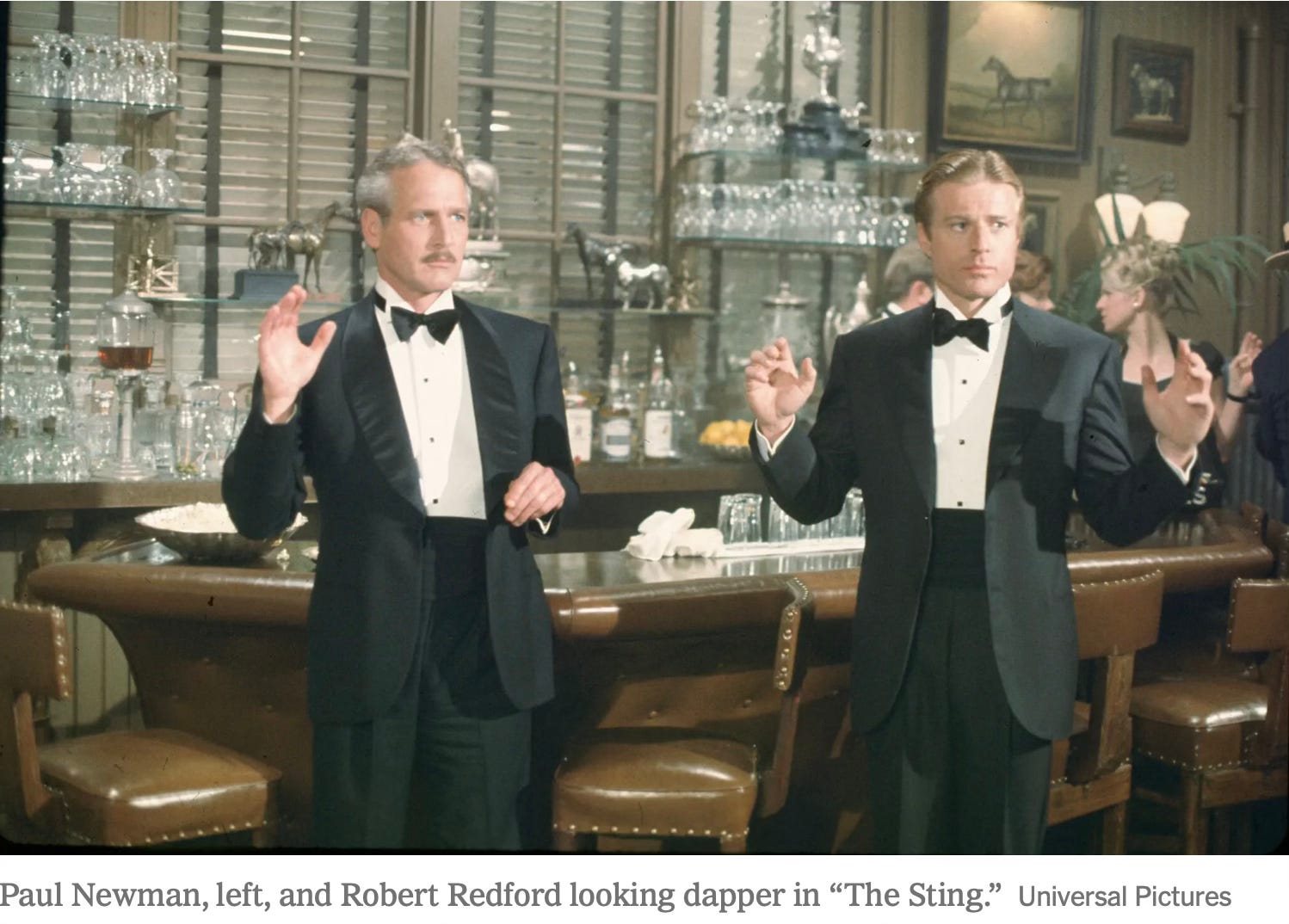
There is something in many of us that attracts us to the dark side of things. Gangsters can seem glamorous. As a sixth grader, after I watched The Sting, I wanted to be a con man.
I wonder what became of Josef’s children — the “Hapsburg” kids in the city, and also the invisible second family in the Midwest! Also, I wonder where they sourced the gristle they served you in Soho. Guess they didn’t use much of the FBI budget to procure good food.
Gee, I'm sure glad you got over lying when you were in your early 20s. Nothing is more tiresome than a liar.