


On my recent trip to Paris, my remembering self had a better time than my jet-lagged, experiencing self. Meaning that a week after the trip ended, I recall specific “peak” moments like being with my wife Debbie, my son Michael, and my cousin Jen, the thrill of finding and buying art we love, the exquisite luxury of our hotel, and the picture window view from our hotel room of Paris beneath shifting skies of cloud and light.

What has somewhat faded are the many moments of anxiety and physical discomfort I experienced because I’m a bad traveler.
I’m not a nervous flier but I know, or have convinced myself, that a European time-change and the associated jet-lag will wreak havoc with my brain and stomach. When I was younger, this wasn’t the case. But now at age 64, it seems to be a consistent affliction. I can’t say whether it’s due to age, infrequency of travel (my son’s hypothesis), or a self-fulfilling expectation (my wife’s theory).
During the two days before the overnight flight to Paris, I tried to pre-adjust to the time change, and all that seemed to do was to start my jet-lag two days earlier.
If I had some magically precise way of measuring my experiences of well-being at every moment of the trip, starting with the few days before and ending a few days after, when I’d re-adjusted to East Coast time, I’m certain that my aggregate sense of well-being during the trip time-span would be inferior to my average sense of well-being when I’m home in New York.
Yet I think the trip was a success.
Perhaps my moment-to-moment experiences are truly lost to me. Irretrievable. Perhaps all I have is my remembering self, which distorts my perception of the trip as being better than it was.
The remembering self is a tyrant
The battle between the remembering and experiencing selves is one of the outstanding behavioral tropes in Daniel Kahneman’s book Thinking, Fast and Slow. Kahneman writes that the remembering self is a tyrant, always and completely victorious over the experiencing self because “memories are all we get to keep from our experience of living.” 1
To compare the relative importance of the two selves, Kahneman conducts a variety of experiments asking questions of large groups of people. For example, which life is better, a life that is consistently very happy and ends at 30 or that same life with five only moderately happy years tacked on. Most people choose the shorter, happier life because they think they would want to be happier at the end.
Or real-world experiments such as patients’ memories of colonoscopies before the use of anesthesia was common practice. Patients prefer a sixty-minute colonoscopy that ends with minimal pain over a ten-minute one that ends at a peak moment of pain even though the longer procedure has far more aggregate pain.
In each experiment, people opt for the choice that maximizes for the quality of the experience at the end even if that choice is inferior in the aggregate experience of pain vs. pleasure.
Kahneman believes his experiments show that it is our memory that rules over us. We are subject to the so-called “peak-end” rule where we remember out of all proportion the peaks of pleasure and pain, especially, what happens at the end of an experience.
According to Kahneman, our experiencing self “does not have a voice” and is like a “stranger” to us.
Two Davids
Kahneman goes too far.
As I contemplate a future return trip to Paris, I’m weighing my experiencing self against my remembering self. It’s complicated because real life is complicated. We don’t live in hypotheticals and we don’t live in laboratories. I’d consider myself an idiot if I didn’t take into account my jet lag or my anxiety or the sporadic protests of my digestive system at eating unfamiliar foods at unfamiliar times.
But where it gets particularly complicated is my currently experienced sense of well-being as I write this, right now. Because I feel good that I made the trip despite the moments of physical discomfort. The David that would travel to Paris to be with his family and deal with some moderate discomfort is better than the David who would have stayed home. That’s not a memory; it’s a current experience of how I think about myself.
Sometimes when I’m writing about a memory, it’s as if I’m there, and I experience the sensations in my body that I felt decades ago. That happened to me when I wrote about and remembered the electric and delicious taste of my first kiss with my first girlfriend. (cf. Proust, madeleine)2
So, if memory can let us experience current feelings of pleasure or pain, that’s a mix of both the remembering and experiencing selves working together. It’s a collaboration not a contest. Kahneman’s dismissal of the experiencing self may reveal more about his own views than about how we actually live.
The Instagram mind
Kahneman argues that when we make decisions, we do so “to maximize the quality of our future memories, not necessarily of our future experience.”Kahneman wrote Thinking, Fast and Slow in 2011 when Instagram was only a year old. Yet Kahneman seems to anticipate our social media world.
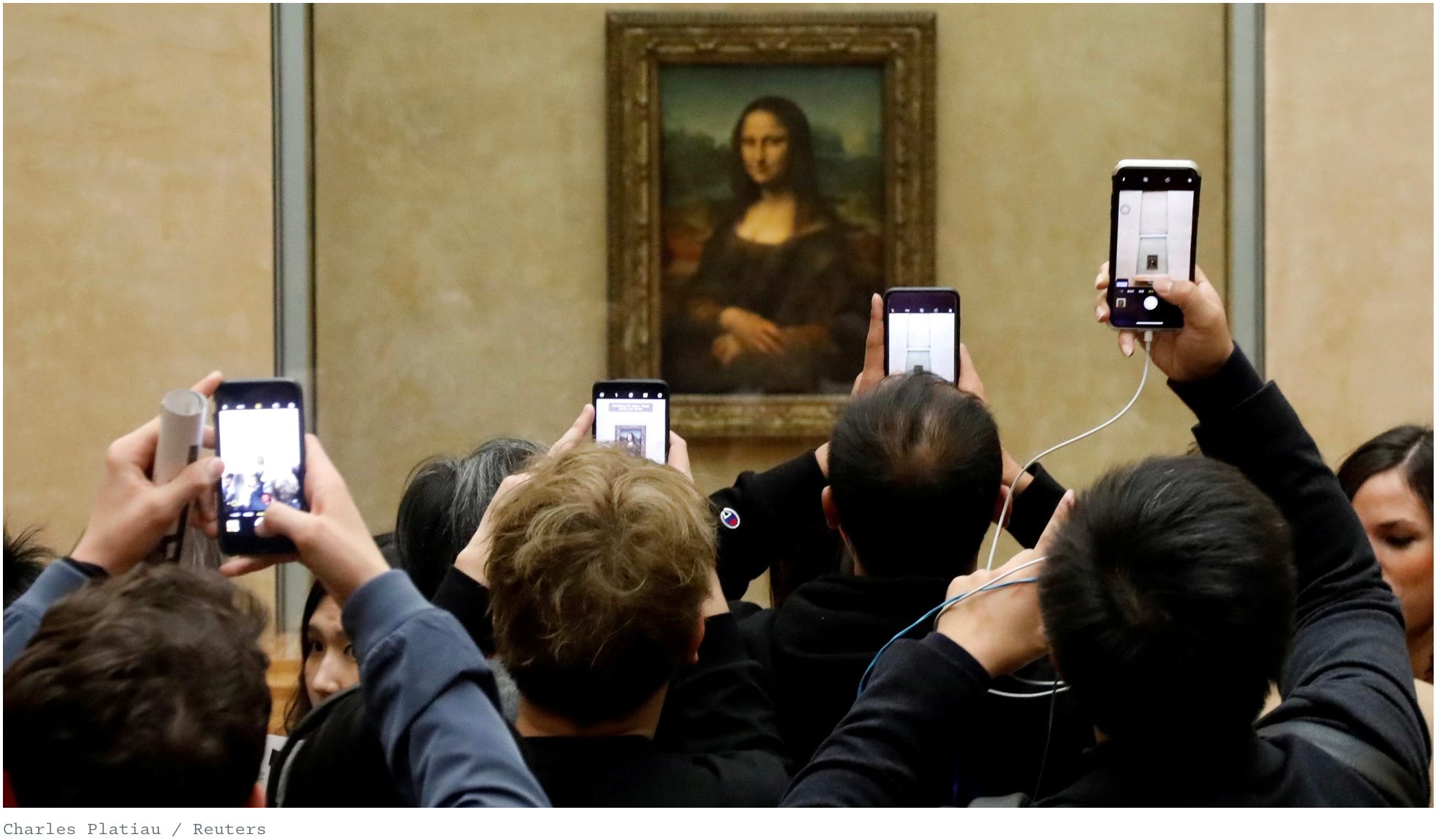
The Instagram mind of 2026 makes decisions based on capturing memories for social media. Many people go to see the Mona Lisa or other iconic objects or famous places not for the experience itself but in order to record the experience. I find this way of making decisions bizarre unless your career is as a journalist or an influencer.
Kahneman poses the interesting thought experiment of whether you would go on an ideal vacation if you knew beforehand that when the vacation was over, all memory and record of it would be wiped away. I suspect few would agree to such a complete annihilation of the remembering self. But Kahneman’s vacation experiment is in the realm of extreme hypotheticals, so I'm not persuaded it proves very much at all.
Moving to a more nuanced and real-life decision—whether I would take another trip to Paris—after weighing both of my selves, I conclude that my remembering self beats out my experiencing self. I will return.3
But it’s a close contest, and the victory of the remembering self is based in no small part on my remembered joy of staying at the Cheval Blanc Hotel. A great hotel makes a big difference to both of my “selves.” Plus, I’d love to go again next October to visit my cousin Jen’s Design show.
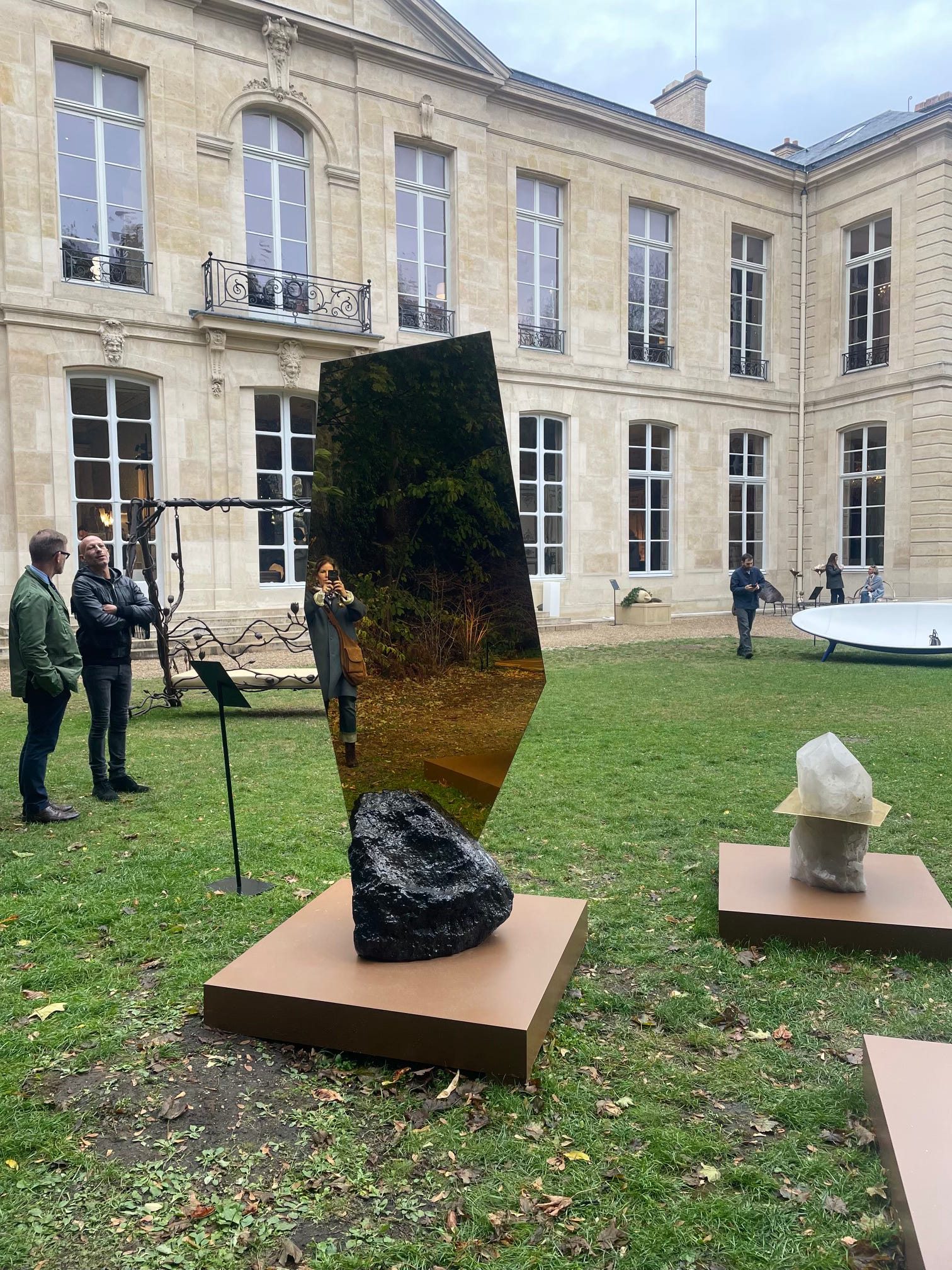
This year at the show we bought a tinted two-sided mirror wedged in volcanic rock. With its tint, the mirror reflects images with a golden hour glow, making everything and everyone look better. The mirror plays a benevolent trick on both our remembering and experiencing selves.
Kahneman and legacy
Kahneman writes that we feel pity for a “humiliated” husband when it’s revealed after his death that his wife never loved him. Or, we feel pity for a scientist whose career-making discovery was falsified after he’s died. This is representative of Kahneman’s emphasis on the all-importance of the ending of a story about one’s life even if the ending happens when the protagonist is no longer around to either experience or remember anything.
This has special resonance if we know that two years ago, at the age of ninety, Kahneman decided to end his life with assisted suicide in Switzerland. Like the main character David in the book Switzy, which I wrote about recently. 4
Unlike David in Switzy, however, Kahneman was not suffering from an acute illness. In an article In First Things about Kahneman’s decision to die “early,” J. Mark Mutz writes that in the days before the assisted suicide, Kahneman spent several happy days in Paris “walking around the city, going to museums and the ballet, and savoring soufflés and chocolate mousse.” 5
It sounds like at age ninety, Kahneman was a far better Paris traveler than I was the other week.
Mutz theorizes that Kahneman made his life-ending decision based on the peak-end rule. If he ended his life while things were still good, then he’d avoid the inevitable decline and perhaps suffering that was waiting for him. In this way, he’d save his remembering self from a downward reappraisal of his life.
As well, people would remember him as the brilliant, Nobel prize winning economist, his mind still sharp. The story of his life would end on a high note and his legacy would be intact.
When Kahneman writes in his book about the pity we feel for people who are dead, it’s not a huge leap to think that Kahneman was concerned with his legacy. And that he did not want people to feel any pity for him.
I’d love to but I’m afraid I have a conflict
Two philosophy professor friends of Kahneman invited him on their podcast for March 27th, 2024. Kahneman declined, explaining that he had made other plans—to die on March 24th, three days before the scheduled podcast. (The “mother” of all excuses.)
In lieu of the podcast, his friends interviewed Kahneman and then wrote an article about the interview, cited by Mutz in his First Things essay. They asked Kahneman why he was choosing to die when he was still healthy. Kahneman replied that he viewed the next years of his life as “superfluous.” 6
When they challenged his claim of “superfluity” by pointing out the importance of his ongoing contributions to science, Kahneman denied that in the scheme of the universe his current or past work had any “objective significance.” That’s a non-answer because nothing has significance measured on the scale of the universe.
I’d never presume to question Kahneman’s decision to choose assisted suicide. I ’d like to think I’d want to stick around if, like Kahneman at ninety, I could be an active tourist in Paris, but it’s impossible to know.
The value of the two selves
Kahneman’s separation of our decision-making process between the remembering and experiencing selves holds great value even if I believe he over-emphasized the remembering self in his writing. We can assess decisions on the basis of which self we’re aiming to please.
Contra Kahneman, I often decide what I want to do based on my anticipation of the experience rather than the memory of it. And sometimes, as in the case of colonoscopies every five years and undergoing the unpleasant prep and not unpleasant procedure (three cheers for the anesthetic Propofol), I choose to experience and remember something unpleasant because I want to live a long time and prevent what can be prevented.
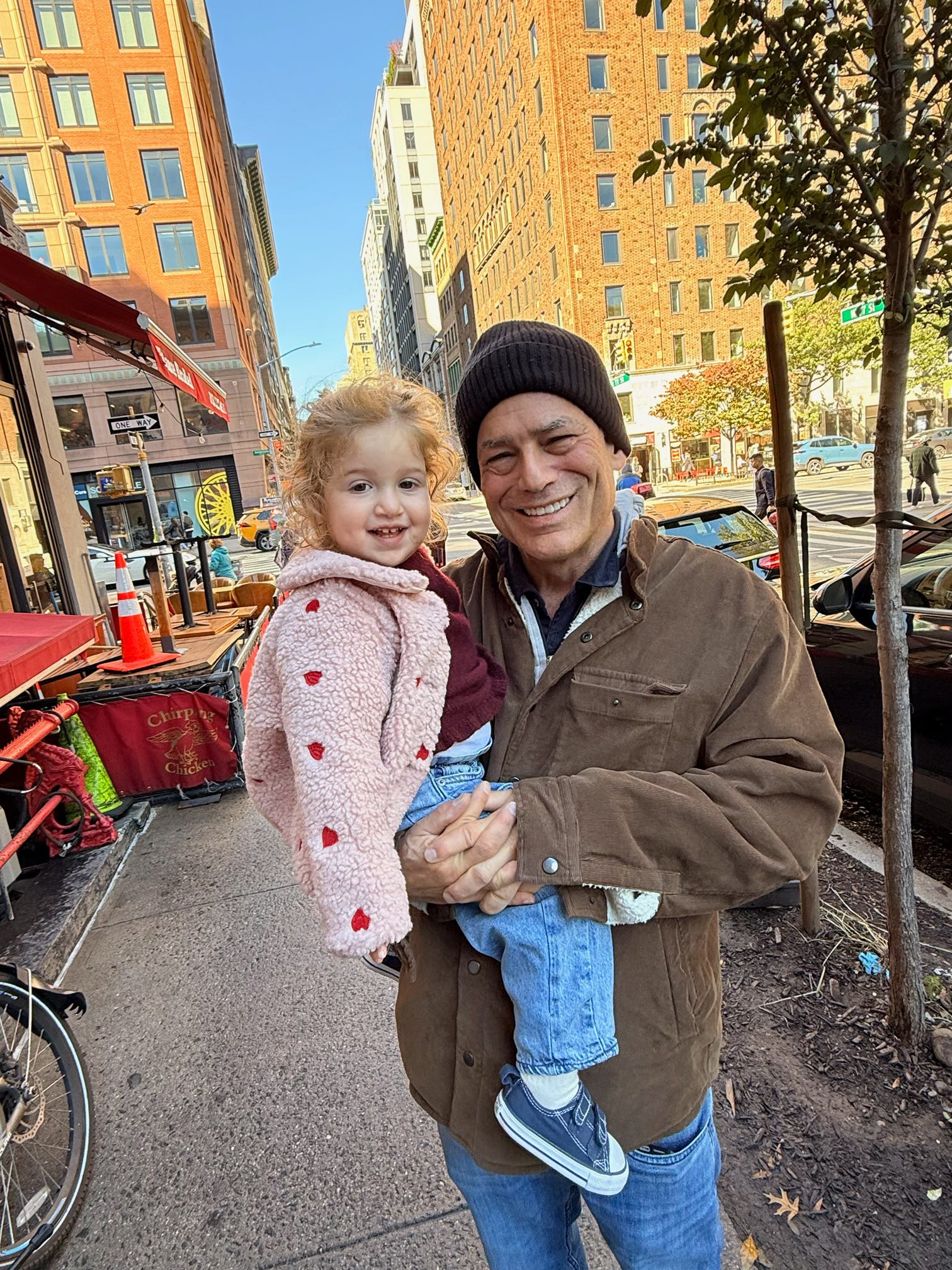
At the other end of the spectrum, I love spending time with my grandchildren because just being with them makes me laugh and smile. When I’m with them, I’m happy. It’s the experience I’m after, not the memory or the photographs. The photographs of me with my grandkids make my point because in them my face is aglow with real pleasure at that very moment.
Kahneman is one of the greatest thinkers on various behavioral and decision-making tricks we play on ourselves. I use his book Thinking, Fast And Slow as an encyclopedia of logical fallacies we humans are subject to.
Did I get in trouble with Debbie for writing about this first kiss, pre-Debbie? Yes.
Changing the subject, if I’m going to reference a memory triggering a physical sensation, I cannot avoid mentioning the most famous literary example: Proust and his madeleine dipped in tea.
Below from the Lydia Davis translation of Swann’s Way:
“And soon, mechanically, oppressed by the gloomy day and the prospect of another sad day to follow, I carried to my lips a spoonful of the tea in which I had let soften a bit of madeleine. But at the very instant when the mouthful of tea mixed with cake crumbs touched my palate, I quivered, attentive to the extraordinary thing that was happening inside me. A delicious pleasure had invaded me…”
In our family, my statement “I will return” is how trips to Paris begin. Both my wife and son will respond, "Great! Let’s plan the trip now.”
Mutz’s essay is based in part on an article in the WSJ by Jason Zweig, The Last Decision By The World’s Leading Thinker On Decisions. Zweig was close to Kahneman as a friend and a collaborator. The quote is from Zweig’s article.
There’s A Lesson To Learn From Daniel Kahneman’s Death by Katarzyna de Lazari-Radek and Peter Singer.
Good writing David. Paris can’t be denied. It can be attacked by silly and spoiled and bigoted people, but it can’t be denied. Memory is a fraud in the service of emotional survival. I took a motorcade trip across country recently and I have great memories of it. But in fact it was miserable.
A few things-
-“which distorts my perception of the trip as being better than it was.” Do not casually underestimate the blessing of having a generous memory! It’s a gift that you look back at things as gifts.
-I love when authors narrate their own articles for the voiceover! The computer voice makes me sad.
-travel is another blessing; have you looked into acupuncture? It can help with jet lag & anything to make the blessings come easier, right?