


In May 2011 when I was Chair of the Riverdale Country School I received an alarming call from the headmaster. A woman had come into the school’s administrative offices and accused her fiancé, a math teacher, of having an affair with a tenth grade student.
The teacher was immediately called in to the office. When he didn’t deny the accusation, he was suspended and soon thereafter fired. That same day, our lawyer contacted the Manhattan District Attorney sex crimes division who started their investigation.
The teacher was arrested in April 2012 and was convicted in 2015 of nine counts, including five counts of third degree rape. He was sentenced to prison for two and a half years.
That is the closest I’ve come, which is not that close at all, to a child sex abuse case. Yet as far away as I was from the incident, I was filled with rage and hate for the teacher. I remember pacing up and down late at night, furious that the teacher would violate every trust placed upon him.
A school is in loco parentis when its students are in its charge. And although the school had done the appropriate reference checks and found nothing troubling in the teacher’s background, l still felt we had let the student and her family down. Just because it happened.
Something much worse
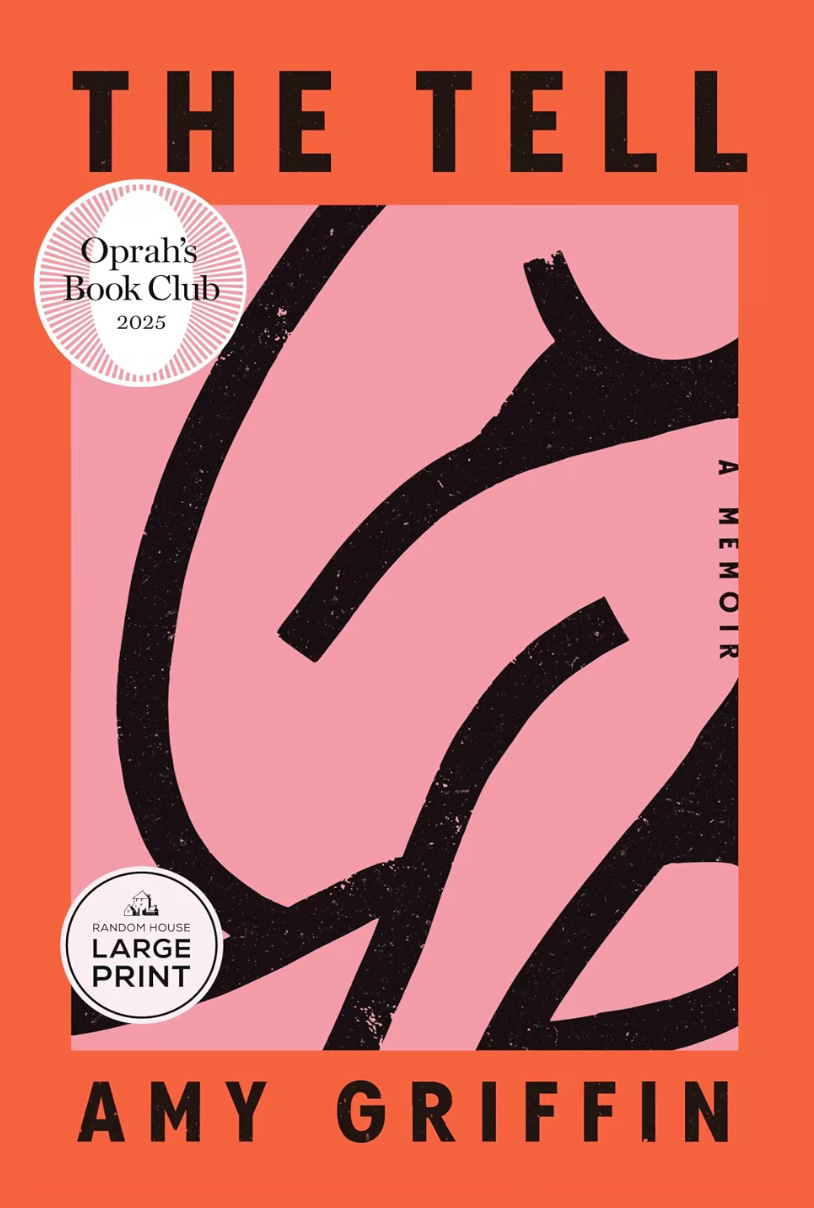
This week, I read Amy Griffin’s memoir The Tell, published last spring. It’s the story of Amy’s recollection, decades after the fact, of her sustained sexual abuse by her male teacher when she was in middle school in Amarillo, Texas in the late 1980s. The abuse started when Amy was twelve and continued throughout middle school with one last episode when she was sixteen. Her teacher groomed Amy with praise and then raped her repeatedly.
Amy never told anyone about her abuse. This was partly due to immense shame.
But her abuser gave her other reasons to remain silent. If she told, he’d knock all her teeth out. If she told, her parents would no longer love her. If she told, no one would believe her.
I hadn’t intended to read The Tell. I’m not a fan of memoirs about childhood sexual abuse. As well, I’d read two New York Times articles that made me doubt the validity of Amy’s story. Amy had apparently recovered her memories under the influence of the psychedelic drug MDMA (Ecstasy). As well, one of Amy’s middle school classmates, Joleene, claimed that Amy had stolen Joleene’s story of abuse by a different teacher and made it her own. Subsequently, Joleene sued Amy and everyone else involved in publishing the book. Amy then countersued.
The Times also cast shade on the extravagant publicity that accompanied The Tell’s publication. Oprah, Reese, Gwyneth, and a cavalcade of Amy’s female A-List friends had actively supported the book through interviews and their social media platforms. The implication was that the book was more a celebrity vanity project than a worthwhile investment of my reading time. 1
Then this week I read an article in New York Magazine about the ongoing controversy surrounding Amy and her book. The magazine article was nuanced, detailed, and well-researched. It included interviews with Amy, Joleene, and others. What stood out to me was that Amy was suffering through another round of trauma and rage by having the validity of her memories challenged. That article made me want to read The Tell. 2
The Book itself
The Tell was written by a ghostwriter based on Amy’s journals and notes. The writing is dull and antiseptic, which is surprising given the content. Some of the portentous sentences at the end of chapters come close to self-satire.
In the book, Amy comes off as neither warm nor likable. Given her story I should have felt a lot more sympathy for her and a lot more rage against her abuser teacher. But the teacher is a complete blank. A villain in a book without sufficient detail is a failed villain. 3
I think the ghostwriter made a huge error in not allowing Amy to own the reality of her great wealth and her luxurious lifestyle. That makes the Amy in the book seem false, like a body double in a movie. There are no details about Amy’s homes or how she travels or really how she lives. Descriptions of landscapes—there are many— do nothing to describe a person.
It’s an easy mistake, however, to conflate the flaws of the book as a literary project with whether Amy is telling the truth. They are two very different things.
“Perfect” Amy Griffin

Amy Griffin is a fifty-year-old NYC-based woman who checks all the resume boxes of extreme success. She’s married to a “good” billionaire––a prolific and low-key philanthropist with a sterling reputation. Amy has four children. She has her own business. She runs marathons; she met her husband John when they were part of a team guiding a blind runner in the NYC marathon.
She has an enormous network of friends. The acknowledgements at the end of The Tell include 33 paragraphs, each devoted to thanking a different friend anonymously but with clues, i.e., “my stunning English rose friend,” or “my wiser, taller, younger friend,” or “to my divine friend who left home to live where there are lemon trees.”
But the book makes clear that Amy’s life was not perfect at all and not to be envied. Amy has had a lifelong obsession with control and perfection. The word “perfect” appears 61 times in her memoir. She was such an obsessive runner that she ground down her body. She tried to be the perfect mother of her four children but ended up “doing things for them, rather than with them.” Her eldest daughter told her she “wasn’t real” and that her perfectionism made her non-relatable as a mother.
Amy credits her daughter’s words with eventually leading to her confrontation with the memory of her sexual abuse. After she does confront what happened to her, Amy starts to become more vulnerable to her friends and family. She tells friends, her children, and her parents about the sexual abuse she suffered in middle school. With each telling of her abuse, she feels “lighter.”
At the same time, she becomes obsessed with bringing her abuser to justice. When a statute of limitation makes that impossible, she searches for external proof that the abuse happened. When she can’t find that external proof, she decides to get a memoir published in part as a way of warning others.
However, I think she wanted to produce the book mainly as a way of trying to balance the scales. She was terribly wronged and evil was done to her. To Amy, a perfectionist and someone who needs to feel in control, to let that imbalance, that triumph of evil, be the last word, was impossible to live with. And a key part of that yearning for control was to prove that her tormenter was wrong about people not believing her.
In all things, Amy is a perfectionist, the “A” student. That included the memoir project. She was determined to use everything at her disposal with maximum effort to get the book published and to get it read widely.
What made Amy different from other authors is she could use the full complement of her vast and prominent social network, including her celebrity connections, on behalf of the book. In her book proposal she included a list of celebrities and businesspeople, more than 90 names, who would support the book, according to the Times.
Doubt
Like me, upon reading the Times articles, many people doubted Amy was telling the truth. I read the Times articles again after I read The Tell and then also read again the New York Magazine article. My conclusion is that the doubts do not withstand scrutiny.
One source of doubt is that Amy was motivated by seeking attention. But why would someone like Amy, a perfectionist with such a busy life, seek attention by making so many difficult and embarrassing admissions to the world, including
The abuse itself and the shame she carried around about it for 35 years.
Her shortcomings as a parent.
Her description of a sexual encounter at age 21 when her date raped her and then complained after subsequent acts of consensual intercourse, “why don’t you ever move when we have sex?”
The New York Times made a big deal about Amy’s use of the drug MDMA as part of her therapy to recover her memories. But a careful reader of the book will note that Amy had her breakthrough just “five minutes” after taking the drug, before it had time to take any effect. Amy’s MDMA guide tells her it takes “thirty minutes” for the drug to “kick in.”
The Times also made a big deal about the non-disclosure of her husband’s investment in an MDMA company. Fair about the non-disclosure but irrelevant as to whether Amy’s memories are valid.
John Griffin is a billionaire. The MDMA company he invested in is private. Its predecessor essentially went bankrupt when the FDA rejected its application for MDMA use. It’s ridiculous to think that Griffin’s investment, likely a small rounding error for him, had anything to do with the book project.
As far as the accusation of Amy appropriating Joleene’s memories of sexual abuse from a different teacher at the same school at the same time, there’s so far not been any evidence to support this claim. Joleene claims she met with Amy in 2019. Amy denies it, and Joleene has no proof of the meeting taking place.4
The strangest Joleene allegation is that she believes a talent scout named Dominique was secretly working for Amy to gather details of Joleene’s abuse so Amy could steal Joleene’s story. In a series of phone calls in April 2022, Joleene told Dominique her life story, including her abuse in middle school. Dominique then ghosted Joleene.
But the Joleene/Dominque the spy story doesn’t make sense. in 2021, well before the Dominique/Joleene calls, Amy had already told the story of her abuse in detail to an Amarillo Police Sergeant. So the timeline of the appropriation of Joleene’s abuse story doesn't work. And according to New York Magazine, Dominique has stated in an affidavit that he hadn’t heard of Amy Griffin until 2025.
But I won’t do to Joleene what has been done to Amy. I’ll believe that Joleene was abused by a teacher at the school until evidence to the contrary is presented.
Finally, there is surprise that other victims of abuse by Amy’s tormenter have not stepped forward.
It’s not typical for an abuser to have one victim. But maybe the abuser in this case decided not to groom another victim. Maybe Amy had a unique appeal to him or maybe something in his life changed.
Maybe there were other victims in different years, but in the conservative and patriarchal culture of Amarillo, Texas, other victims didn’t want to complicate their lives. This was the advice Amy received from some of her confidantes, including Anna Wintour who advised her not to write about her abuse telling her, “But you have such a nice life.”
I find it problematic to doubt Amy just because no other victims have come forward. That’s speculation, not evidence. Against which stands everything Amy has said and done to tell her story. 5
The cruelty of disbelief
One of the themes of Amy’s book is her constant fear that people won’t believe her. As a perfectionist and a seeker of absolute order, she had doubts herself. She desperately wanted irrefutable proof of her abuse in the form of another victim coming forward.
By the end of the book, she’s accepted that she will likely never get that absolute proof but she also has reached a point where she’s certain in the truth of her own memories.
Primo Levi, the foremost literary chronicler of the experience of being a prisoner during the Holocaust, writes that the Nazi guards would taunt the prisoners that if any survived no one would believe them that the Holocaust really happened. As a result, Primo and other prisoners would dream essentially the same nightmare: that they’d come home as survivors, would tell everything they’d seen and suffered, and then their families would turn their backs to them in silence and in disbelief.
My point is not to compare the suffering endured by victims of the Holocaust with the suffering of victims of sexual abuse. Rather, I want to highlight the fear and the rage of having suffered and survived something horrific and then having people tell you that you made it all up.
I felt awful for Amy after I read the New York Magazine article. She did a brave, hard thing in going public with her story. For a few months, between the book’s publication and the Times article, she thought she’d proven her tormenter wrong, and that people would believe her. Then came the snide Times articles and the lawsuits and the chattering classes pounced on her.
Until there’s dispositive evidence that Amy is lying, I will believe her. To do otherwise is cruel.
The Times article from September 2025 about Amy Griffin. The Times article from March, 2026 about Amy Griffin. The Times article from March 2026 about Amy Griffin.
The Times articles gave me and many others the impression that there was something very wrong with Amy’s story. The Times was careful not to make any provably false statements, yet the articles still come off as hostile hit pieces.
As an example, the first and by far most comprehensive article, which incited much of the doubt, ended with the comments below from the Amarillo police sergeant who Amy spoke to. Note the editorializing I’ve bolded, which is what a reader will remember rather than the first word qualifier of “typically.”
“Typically, Sergeant Eatley said, perpetrators of sex crimes against children abuse numerous victims. ‘They don’t stop.’
He added, ‘I’ve worked older cases before. You find other people.’
That Ms. Griffin’s memoir received enormous publicity and still did not yield additional claims against Mr. Mason is particularly confounding to Sergeant Eatley.
‘There is nothing,’ the detective said. ‘Zero’.”
The New York Magazine article. It’s paywalled but I think you can get a limited number of free article per month.
I suppose there were legal reasons for the publisher to obscure the identity of the teacher. But he was outed anyway.
Amy’s classmate Joleene sued Amy under the pseudonym “Jane Doe.” Amy countersued using Jane Doe’s real name, Joleene Altum. I don’t see any fault in Amy using Joleene’s real name. If Joleene wanted her story of abuse to remain confidential, she shouldn’t have started the litigation. Lawsuits and kindness are about as mutually exclusive as two things can get.
Brooke Warner is an experienced editor of memoirs and a writer I respect. Brooke has been an Amy skeptic from the beginning and has written about it on her Substack Writerly Things with Brooke Warner.
After the New York Magazine article came out, Brooke moved a bit toward considering believing Amy.
“I’ve always been open to the possibility that Amy Griffin could be telling the truth because we really don’t know. I’ve said I didn’t believe her, that’s true, and at least this New York magazine resolves some of the things that didn’t make sense.”
I disagree with Brooke’s position. I don’t find her points persuasive. But in case you want another point of view, below is her post after she read the New York Magazine article.

Not a book I will read, but I’m as ever admiring of your fair, balanced assessment of things, and that you believe women (and dismiss the easy “she wanted attention”). Thank you, David.
Well researched, thought out, and argued, David. A smart and sensitive response to a sad and horrific story - both the original and the aftermath.