


I finished re-watching the HBO series Scenes From A Marriage about the devastation of a ten-year-old marriage. It led me to ask my wife Debbie what our marriage was like after ten years time, circa the mid 1990s. I needed Debbie’s help to remember.
The TV marriage in Scenes is between beautiful Jessica Chastain and handsome Oscar Isaac (albeit disguised as a Jewish professor under loads of facial hair and glasses). They talk a great deal about their relationship, treating it as something separate, as a third partner in their marriage. 1
I wondered if Debbie and I had done much talking and analysis about our relationship.
Debbie said we hadn’t. We were too busy. Ten years in, we had three young children and a built-in schedule of activities and a social life revolving around our kids’ school. What we talked about far more than anything else was our three children.
On the weekends we all retreated to a house in South Salem where we had minimal obligations and very few scheduled activities. Doing nothing together as a family was heaven.
During the week, Debbie woke up with the kids. I usually took them to school and then went off to work. Debbie was in charge of the household, and when I returned from work, we’d all hang out, and then I’d put the kids to bed, often performing ridiculous comedic set pieces to a uniquely enthusiastic audience.
I asked Debbie if we’d always been amorous. She said we had. When? Whenever the opportunity struck. She reminded me how we used to take “staycations” in downtown hotels. We were early guests of the Mercer Hotel when it opened in 1997.
The picture below is from 1999, 14 years into marriage when we were thirty-seven-years old. Yes, it was taken by a professional photographer, but the laughter is real.

Stresses
Of course we had conflicts and stresses. I had peaks and valleys at work that affected my mood, sometimes severely. I’d worry that I wasn’t succeeding as fast as some peers. Alternatively, I’d worry that by working in finance I was missing out on an intellectual career where my work would have more purpose.
Debbie questioned whether she had lost a part of herself by choosing to be a stay-at-home mother. When we met, we both were working on Wall Street. After we were engaged, Debbie decided that two people with finance careers wasn’t a good set-up for a family so she went to Parsons to study design.
But I don’t recall our stresses being a direct cause of fighting. Certainly when either of us was down, it could affect our moods and make us snap at each other. But the snapping never led to personal insults.
Snapping and bickering were about specific actions. There was my messiness and my legitimate incompetence at most chores. There was Debbie’s insistence on staying to the end of galas and other events when I desperately wanted to go home. 2
Many fights took place during our annual vacation every winter to The Breakers in Palm Beach. It was my family’s tradition and I loved it. Debbie hated it. My post about the most memorable of our many Breakers fights is in the footnote. 3
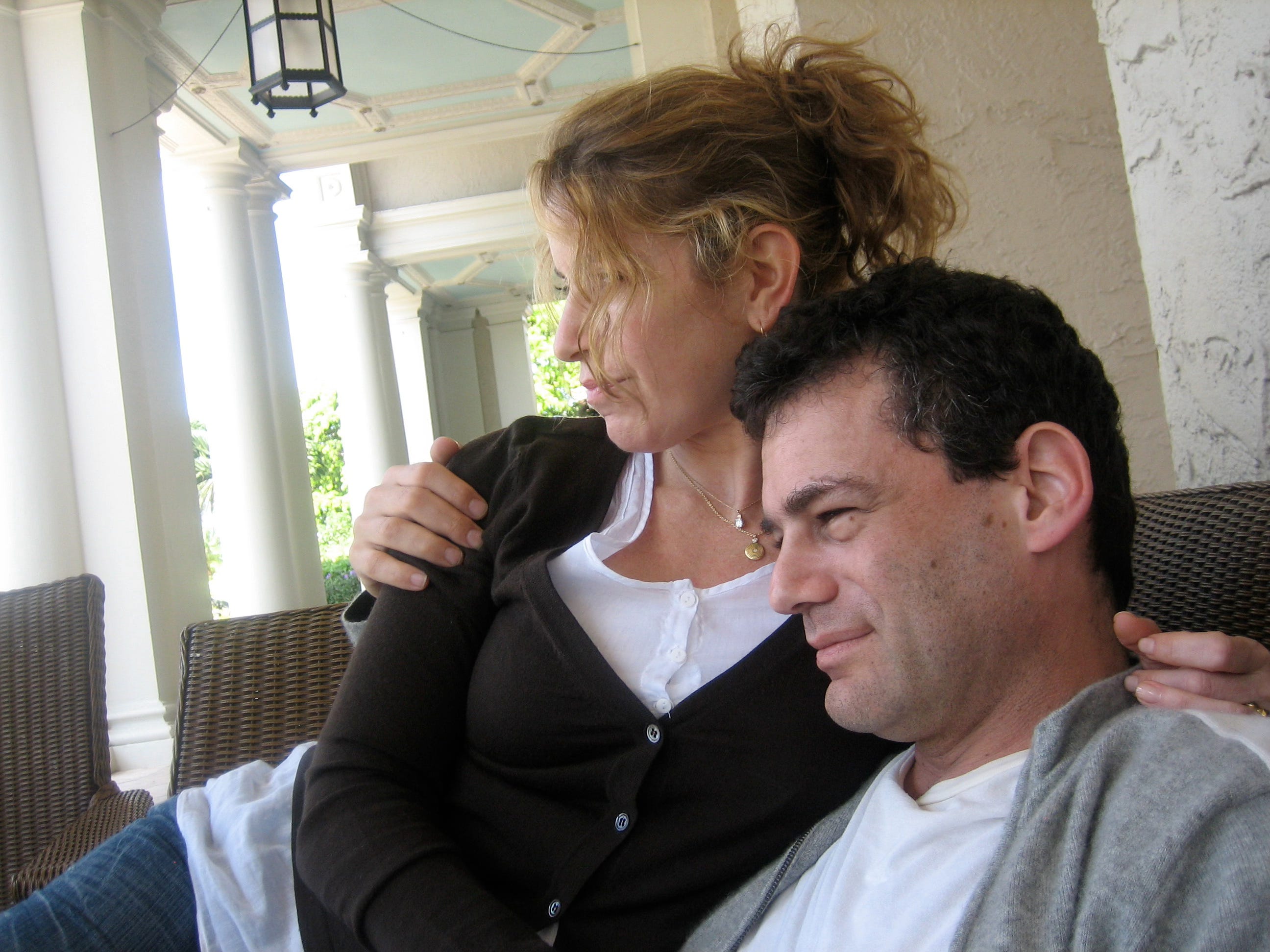
But we always made up quickly, and fights never stopped us from being each other’s biggest fans and cheerleaders. Debbie would listen to my complaints about work and reassure me that I was doing a great job balancing career and family. I was able to manage my work-life so I could be home almost every night at around six. And she appreciated that we were able to enjoy a lifestyle she’d never expected.
I’d tell Debbie in spoken words and many letters how wonderful she was as a wife and mother. How her skill at organizing our lives was invaluable and could be applied to anything she wanted. I encouraged her to take on a variety of what we’d now call side-hustles.
Both of us were insecure about our appearance. I’d grown up thinking I was ugly. Inexplicably to me, Debbie didn’t think she was pretty. She once asked me the brilliantly unanswerable question, “Have I always been this ugly?”
But I thought she was beautiful and she thought I was handsome. That may be shallow but it was important to us and it took decades of compliments to convince each other our compliments were sincere.
It also took decades for us to believe each other about our strengths. Without that mutual support, I’m convinced we’d be far less secure in ourselves today and far less happier.
A recent fight between Debbie and me
At the start of this month, Debbie and I were in our house, just the two of us, with no plans for the weekend, an ideal state of affairs and so an odd time for a fight to break out.
For most of the afternoon, Debbie was listening to an audio book on her AirPods as she munched on popcorn. The crunching was extremely loud––infernal to me, soundless to her. We were in the same room but she had her back to me.
When Debbie and I are in separate locations, I miss her but look forward to her return. And I’m perfectly happy when we’re at home together doing our own separate things. I still sense her presence and feel we’re connected and available to one another.
But that afternoon, self-secluded by her AirPods and the earthquakes of her crunching, Debbie had made herself unreachable. I felt intense loneliness. Perhaps it’s true that the most hellish loneliness is not when you are alone by yourself but being with someone and still feeling alone.
The audio book Debbie was listening to was The Calamity Club, a book I’d read, loved, and recommended. Debbie loved the Southern dialects of the book’s narrator. The fact that I’d suggested the book made me angrier. I’d been the architect of my own perceived isolation. 4
I went upstairs for a while both to escape the crunching and in the hope that Debbie might miss me and come looking for me. But she didn’t. Only Sophie padded upstairs to keep me company.

Sophie and I went back downstairs. The popcorn explosions had ceased but now Debbie was assembling shelves as she continued to listen to the book. I was invisible to her. I was way down on her list of priorities. My anger grew.
Debbie is a completist, and she loves puzzles. When she is assembling something, she is in a zone of absolute concentration and contentment. She hates to be taken out of that zone. These facts, which are well known to me, ought to have figured into what I did next. But they did not.
Debbie sat next to me on the sofa and put her arm around me. She was still listening to the audio.
In the fantastical life lived within my mind, we’d had a titanic fight. I was the aggrieved party, and by offering me casual affection, Debbie was twisting the knife in. So I detached her arm and looked away. Two could play at this game.
At that, Debbie finally removed her AirPods and asked me what was wrong. I told her that by listening to her audio, she had become a “ghost” to me. That it was awful to be in the same place as her and have her make me feel so alone. I gave her a look she calls the “Bad David.”
In our current state of marriage, if I express anger with words, a look, or both, Debbie will feel that she’s disappointed me. Then, she becomes incredibly sad. She will tell me that I have shattered her world and her heart. It’s worse when she’s surprised by my disappointment. And even worse when she has no chance to reverse what she’s done.
So when I called her a ghost, her face registered first shock, then pain. Then many hours of sadness followed until my apologies were accepted.
I have this to say for myself. At the age of 64, my capacity for acting like a child remains undiminished.
Codependency?
Codependency is supposed to be bad. You should be your own independent person and not rely on any one person for approval and self-esteem.
But Debbie and I are both codependent in our mutual reliance on each other’s approval. Our rare fights are generally triggered either by Debbie thinking she’s done something to disappoint me or by my being jealous of Debbie’s attention. The AirPods fight contained both elements.
Perhaps someone will tell me that I’m using the term codependent incorrectly. If it means holding each other down, then Debbie and I have done the opposite. We’ve built each other up.
Great love, great risk
As for the AirPod fight, I can’t recall why I was so vulnerable that day, why I interpreted Debbie’s actions as a brutal rejection of me. Of course it was irrational. And I’m sure I was projecting some external angst onto Debbie who was innocently enjoying her popcorn, her book, and her furniture assembly.
Over 42 years, our love has compounded, “as if increase of appetite grew by what it fed on.”5 Perhaps it was inevitable that we’ve made each other’s love a foundation, a condition precedent, for our self-esteem.
With great love comes great power over the other person for good or ill. To love as deeply as I love Debbie is to surrender myself to her. I’m usually absolutely secure in her love but every now and then I’m still a bundle of nerves. Even after all this time. Especially after all this time.
Here we are today, older and sometimes wiser.

Question for the comments: Tolstoy famously begins Anna Karenina: “All happy families are alike; each unhappy family is unhappy in its own way.”
However, it seems to me that families and marriages can be happy in an infinite variety of ways. What say you?
I think Scenes From A Marriage is a great show. I enjoyed it even more on the rewatch. The two leads are terrific as is the writing. Both characters have their virtues and their flaws. I can relate both to Jonathan’s (Oscar Isaac) overwhelming pain when Mira (Jessica Chastain) leaves him for another man. And I can relate to Mira’s frustration with Jonathan for talking everything to death.
This clip is from the opening scene where the two characters reveal a great deal of what’s to come.
Debbie’s motto about formal events continues to be “I don’t leave until after dessert is served.”
A Fight Reveals The Fault Lines in My Marriage

While she was dating and before she became a wife and mother, our daughter Lauren complained that our seemingly perfect marriage was an irritant and burden to her. Debbie and I had met at 22, were married a year later, and as the years went by had fallen deeper and deeper in love. Everything had come easily to us, Lauren claimed, and we had set an impos…
The Calamity Club, by Kathryn Stockett, the author of The Help, transported me to 1933 Mississippi and was both a great story and a well researched historical novel. I tore through it.
Hamlet’s idealized description of his parents’ love for each other.
Mom’s chewing is extremely annoying, but interrupting her mid organization task is crazy! Love, your daughter
Ah yes, the annual (or perhaps less frequent) row. I don't keep track of them, they are rare – but surprisingly strong. I think why in the world did I ever marry this man,, we won't talk for a few hours and somehow it passes with a little stroke from one, not reciprocated, but eventually reciprocated and before I know it everything is right as rain. Has kept us going for 63 years in ten days! Just keep going.