


I’m on vacation in Paris and taking the opportunity to feature a terrific essay about wealth by my Substack friend Jessica @ Post-Wealth Project. Jessica and I both write about wealth from the “inside.”
Jessica is candid, authentic, and incisive. Her wealth story is different than mine, so she offers a different perspective.
Her essay below is one of my favorites. It’s based on Jessica’s experience with money in the wake of her parents’ divorce. An excerpt:
“In my family, money was never just money. It was a way to yield power and a way to be protected. It could be weaponized, but other times it was the closest thing to care that anyone knew how to offer.”
Lessons on power, money, and care
I was ten when my dad served my mother with divorce papers as well as a termination notice firing her from the family business she spent 20 years helping build. In a letter I found among her things after she died, he wrote to her that since she was no longer working and could be home with us, he would no longer pay Sarah.
Sarah was our nanny and household manager who worked in our home every weekday and some weekends decades. School pickups? She did them. Dinner? We loved her chicken and dumplings best. Bed and bath time? She was there. She was indulgent and loving and funny, and by far the most stable and reliable figure in my life. Whatever capacity I have for secure attachment survived the upheaval of my childhood largely because of her. She was my primary caregiver. I loved her without reservation.
My father was never coming back and my mother had been banished from the family business. Everything was changing. But for ten year old me, the threatened loss of Sarah was the hardest part of the whole thing. I was heartbroken that I was losing the person who was a second mother to me. I was worried what she would do without a job, and how my mother would cope without her. Dad could go, but to take Sarah with him on the way out of the door felt cruel and unbearable.
It was the first time I realized that money could decide whether Sarah stayed in our lives. It was also my first time seeing the way money could be used to punish. I didn’t yet have language for the patterns that were emerging, but I have never forgotten the fear of those first weeks as I confronted how little control I had. I was starting to learn that money equaled power, but it would take me many more years to understand how money organized relationships in my family. I’m still working to understand it.
The family restaurant business was the chief organizer of how my family spent our time. It was demanding, and both of my parents and grandparents gave it their total devotion. During the busy season my parents kept punishing hours at the original location that my grandparents opened in the mid 1950’s. In the wintertime, they traveled all around the Mid-Atlantic to open restaurants in other cities like Baltimore, Norfolk, and Washington, D.C.. Later, my dad began taking multi-month business trips to the other side of the globe. This is the backdrop of why a full-time nanny was needed. Even with her support, I missed seeing my mother especially. On weekdays I might see her only in the morning as she got me ready for school. Sometimes I would call the restaurant at bedtime, wanting to say goodnight to my mother. I would listen to hold music for 20 or more minutes as they searched for her across two stories, 14 dining rooms, and six kitchens.
As children we were included at a young age. I watched with interest as each sibling began working, and I loved the stories they brought home (if not the smell - my brothers began their tenure as crab steamers and they had to leave their shoes and clothes outside the house at night). I joined them when I was 11, first as a shy hostess in the dining room and later taking and bagging up orders in the carryout. I can’t say when I was first able to articulate that the line between family and business was a blurry one. In fact, it wasn’t really blurry - it just wasn’t there.
It had always been that way. My mother told me stories of how she experienced it early in her marriage. At dinner one night with my dad and grandparents, in a moment of frustration she blurted, “It would be nice if we could have a conversation that wasn’t about the restaurant.” In the silence that followed, she got the message loud and clear: this is the family culture.
As I stepped into working for the family business, that family culture became newly visible to me. I was acutely aware of how people treated me once they realized what my last name was. Sometimes it drew people to me, wanting to be closer to the inside. Sometimes it repelled people, who assumed certain things about my personality from my last name. The lines between self and family, between the individual and the system—none of these were clear. In the restaurant, who you were and how you behaved were never just personal matters; they were business.
I found this environment increasingly difficult to participate in as I grew older and learned how business conflicts had contributed to my parents’ divorce. My dad disappeared from my life, not slowly but quickly, to pursue an entrepreneurial vision. As I became a teenager, I grew suspicious and cynical about the business and the culture of ambition that drove it. I resented the ways my personal identity became subsumed by the family identity and began to believe that our family had paid too high a price in service if the business. The core relationships of my life should ideally have been served by this structure. Too often they were eclipsed by it.
Some relationships became almost entirely replaced by money. My father was largely absent but provided financial support; in this way he financed my first two cars, my wedding, and many years later, my divorce. He was not there, but his money was. I disliked taking money from my father, but it was the only kind of parenting on offer. I knew that this was his best effort at a proxy for care, but I disliked how vulnerable it made me. I had learned as a child that he could take back as easily as he gave.
As my father showed me how money could replace presence, my mother taught me another lesson. Money was always tight during those early days after their marriage broke up. Anytime I would head into a store to buy a candy bar, bottle of soda, or anything else she would call after me, “Don’t forget to get a receipt!” After she died, I found boxes of receipts in her papers—small bundles carefully organized and stapled together, each one returned to her by my father’s financial manager after reimbursement. They were a careful record of her parenting, insisting that the debt caused by my father’s absence be recorded and repaid.
My mother had the ability to demand what she deserved because she had a safety net - an inheritance from her father. It gave her bargaining power at the exact moment she was at her most vulnerable, and allowed her to not rush to a settlement out of desperation. Without it, I suspect the story of her life after marriage would have looked quite different.
Looking back on these years brings pain, and anger, but also a realization that so many lessons about money were being absorbed. In my family, money was never just money. It was a way to yield power and a way to be protected. It could be weaponized, but other times it was the closest thing to care that anyone knew how to offer. Sometimes, it was the only way an out-of-balance ledger sheet could be settled.
While my parents’ lawyers eventually reached a compromise that allowed Sarah to return to work, her daily presence in my life still ended several months later. After working for the family business for two decades, my mother was pursuing a long-delayed dream by going to law school. This meant moving. I lost my anchor at the exact moment things were getting really hard: new town, new school, divorce, and a mother that was suddenly a first-year law student.
My homesickness for her was so great that some weekends my mother would put me on a plane to visit Sarah. It was the kind of short ride where as soon as you reach cruising altitude, it’s time to begin descending. As the plane taxied in, Sarah—who we called Nana—was always already standing at the gate, looking through the window for me. I could see her as soon as we landed, right there waiting, solid as a rock.
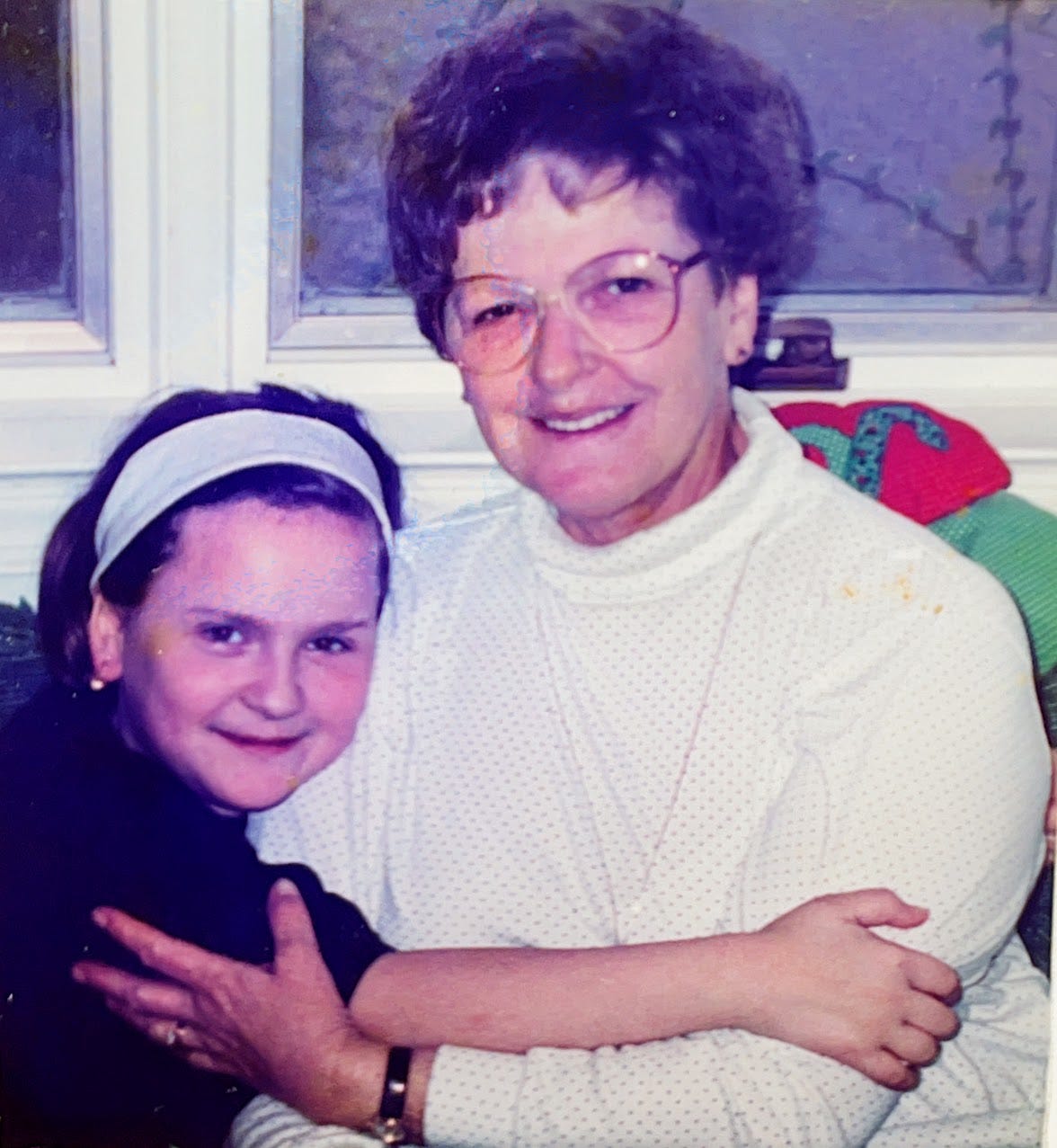
Sarah Vickers (Nana) 1940-2003
More in this conversation:
Why Financial Independence Doesn’t Bring the Happiness We Expect
·
MAR 13
A few years ago, my family explored selling our business.
Are You a “Good” Rich Person?
·
APR 1
We had just finished checking in for a short stay at the luxurious volcano-adjacent hotel & spa in La Fortuna when another couple arrived to check in. I noticed right away the small raffia bag the woman was carrying with the conspicuous LOEWE logo stitched across it. I nudged my partner, “Check out her bag,” I said, “That definitely cost her over $1000.…
Hyperagency and the asymmetry of wealth
·
FEB 24
The sky is blue today in Costa Rica. Orchids and ferns grow along the trunk of the mango tree in the courtyard of our rental home. Winter weather and seasonal depression once structured my January; now I structure my January around sunshine and warmth. This is our fourth winter here, and it’s the first time I haven’t been employed full time for someone …
Good morning David. With all sincerity, and like so many other things, it’s not the money - it’s the people. Money may be an enabler, but it comes back to us as people.
This is lovely and reminded me so much of my life with au pairs. One of them lived with us for 8 years. She still comes to visit (I'm 35 now, with my own kids). The steady presence of these other caretakers was vital as my parents I barely saw during the week. And yes, yes, to money never just being money.