


When my work in finance was going well, I’d come home feeling great about myself. One of my investments had made a lot of money or I’d resolved an intractable issue or I’d spotted an error in a draft analysis and saved a colleague and the firm from a mistake.
But upon returning home on those days when I felt heroic and well-loved at the office, after I’d moved through my day with enough frictionless efficiency that I was home in time for dinner at six, I encountered various domestic issues that could seem trivial to me, a master of the universe.
One of our three children was in an awful mood because of a friendship crisis at school. My wife Debbie was unhappy that a bill for household repairs had come in higher than she’d expected. And unhappy with me when I told her “don’t worry, we can afford it.” Or I’d failed to put away my clothes from the morning or hang up my suit when I got home. Or, at dinner, when one of our children had let loose their fearsome and biting sarcasm on a sibling, I’d laughed, thereby encouraging bad behavior.
On such evenings, I’d think about the contrast between the respect and deference I received at work and the hassles and criticisms I received at home. I was tempted to point out this discrepancy, but, saved by my better angels, I don’t recall doing so. Truly, I was saved from a terrible fate by first accepting and then embracing the frictions of my home life.
Oligarchs and their pursuit of the frictionless life

In a brilliant recent article in The Atlantic,1 Noah Hawley (Fargo TV show creator) writes about his attendance in 2018 at an exclusive (80 person) weekend retreat in Santa Barbara hosted by Jeff Bezos.
As Hawley tells it, the no-expenses-spared event called “Campfire” is an attempt by Bezos to create an environment that eliminates all inconvenience, all friction. All the typical luxury trappings are involved––private jet travel, a nanny for every child, buying out the entire Biltmore resort, gift bags with designer goods, and so on. The event itself sounds boring––ponderous lectures and serious TED-style talks all day.
It’s 2018 and at this Campfire, Bezos is just a few weeks away from leaving his long-time wife Mackenzie Scott for Lauren Sanchez who he’d been having an affair with. Hawley’s “defining impression of [Mackenize Scott] that weekend was sadness.” As for Bezos, Hawley clocks him as still caring, perhaps for the last time, about what other people think of him.
“[Bezos] made a big show of performing the role of family man.”
Eight years later, in 2026, even the pretense of caring about the judgment of others is gone from the life of Bezos and other similarly situated oligarchs like Musk and Zuckerberg. They have slipped the bonds of restraint and live with a different pretense: there are no limits to the imposition of their mastery over their environments.
Hawley summarizes this nicely:
“It’s not that the wealthy become evil; it’s that their environment stops teaching them the things that non-wealthy people are forced to learn simply by living in a world that pushes back.” 2
Despite all the money Bezos spends on his 2018 Campfire, friction still finds Hawley and his family. His wife slips on wet grass and breaks her wrist. Hawley and his two kids later come down with hand, foot, and mouth disease.
As he’s leaving Campfire, Hawley tells Bezos what happened to his wife and compliments Bezos about the supportive and quick reaction of his staff. But Bezos is unable to confront even this gently delivered and indirect friction.
“Bezos looked horrified. He did not say ‘I’m so sorry.’ He did not say ‘Do you need anything?’ Instead, he made a face, and in an instant, an aide came and whisked him away. When presented with the opportunity for empathy, even performative empathy, he chose escape.”
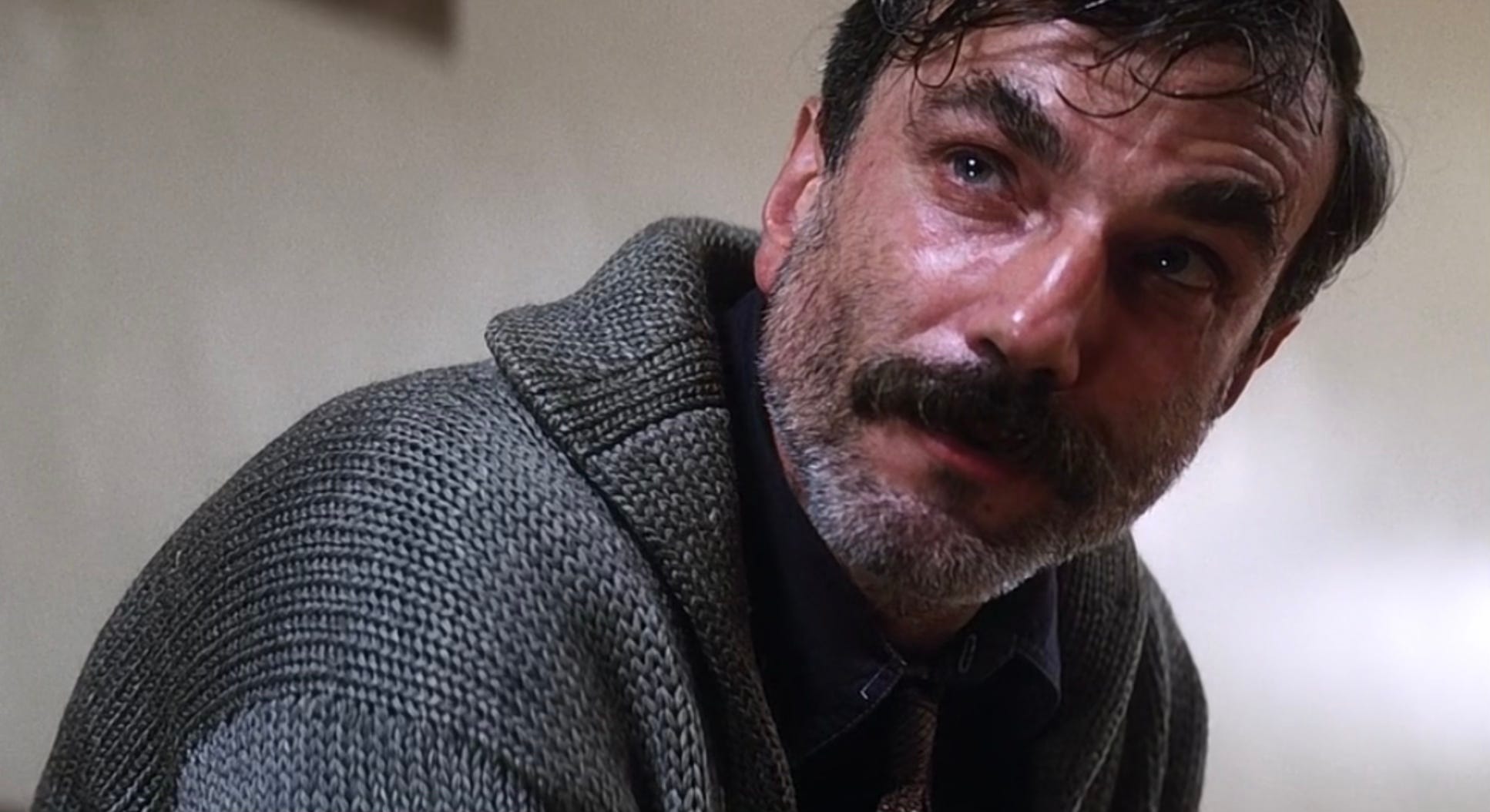
To Hawley, these oligarchs are like the demonic, murdering oilman Daniel Plainview at the end of the movie There Will Be Blood. To live as a god not subject to any rules you end up living as a monster. 3
Jeff Bezos, meet Ivan Ilyich
Leo Tolstoy’s Ivan Ilyich is a cautionary tale of a life lived without friction or empathy. A life not only unexamined until it’s too late but a life lived passing swiftly over a surface as smooth as glass, missing the disruptions and disorders of meaningful human relationships.
In Tolstoy’s 1886 story The Death of Ivan Ilyich, Ivan is a successful bourgeois bureaucrat dying from an increasingly painful and horrible illness. The deterioration of his body is awful. But his realization that he has wasted his life makes his physical anguish “ten times worse.”
Before his illness, Ivan had been ambitious and wanted to do everything in the best and proper ways of his time and place, but always with absolute priority given to his pleasure.
Eventually, Ivan marries and is horrified to discover that married life with children is complicated and often disrupts his enjoyment. His children are annoying distractions and his wife dares to yell at him!
So, Ivan seeks refuge from his home life in his duties as a senior official. Ivan’s work is a world he can control, “a separate, carefully guarded world,” where he can distance himself from anything unpleasant.
Not unlike the world of Bezos’s Campfire.
The seduction of the office
Ivan is seduced by the power of his official duties, which increasingly become the center of his personal universe. He can accuse any person of anything and thus holds great sway over everyone, whether guilty or innocent. Immersed in his work, Ivan is determined to “eliminate the element of crude, everyday life” from his existence.
Similarly, oligarchs like Bezos are always working, always hustling, always putting themselves at the center of every activity where they hold all the power. Everyday life can’t compete with the seductive illusion of absolute power.
A frictionless environment
Other than work, the only thing Ivan seems to care about is creating a home that will be unique in the beauty of its design. The aristocratic Tolstoy––a bit of a snob––points out that Ivan’s home with everything “dark and gleaming” ends up being indistinguishable from all the other upper middle-class homes that try (and fail) to mimic the true aristocracy.
Ivan is a snob as well and drops any “shabby” friends in place of those who are just like him. Ivan’s social life is playing cards and going to dinner parties in lookalike homes with lookalike people.
Similarly, oligarchs like Bezos go to the same events with the same people––idea festivals like Campfire and Davos where the oligarchs are feted and solicited. It’s a land of money, friction-free, where you might not be able to tell which city you’re in and it doesn’t really matter because your every need, including your ego, is cared for and curated.
A life poorly lived
At the end, as death nears, Ivan realizes how trivial his entire life has been. He’d thought his life had been ”going uphill” according to the standards of society but in reality, he’d been going downhill all the time. His only happy memories are from childhood. He remembers
“the raw and wrinkly French prunes of his childhood…and how his mouth watered when he got down to the stone.” 4
Bezos is as mortal as Ivan. Everyone dies. I wonder what Bezos and his fellow oligarchs will think about as their time of death approaches. I suspect they will have to go back to the reality of their pre-oligarch times, perhaps, like Ivan, all the way back to childhood to recall true happiness.
I doubt that Bezos will revel in remembering his over-the-top, PR-fest wedding to Lauren Sanchez in Venice. Or that Musk will revel in remembering his performances on stage with his DOGE-themed chainsaw or his Nazi salute.
Tolstoy gives poor Ivan a somewhat hopeful ending. At his death Ivan literally sees the light and feels for the first time love and pity for his wife and son (but not his daughter!) All of it comes in a single moment of death.
Nanosaur
When I remember my earlier days as a parent, it’s the friction I remember. It’s the friction that leaves its mark and creates stories precious to me.
A particular day stands out. I came home from work in a triumphant mood and decided to grace my six-year-old son Michael, our youngest child, with my fatherly presence. In my dark suit and muted tie, I found Michael in his room, sitting at a low table playing a Mac game called Nanosaur.
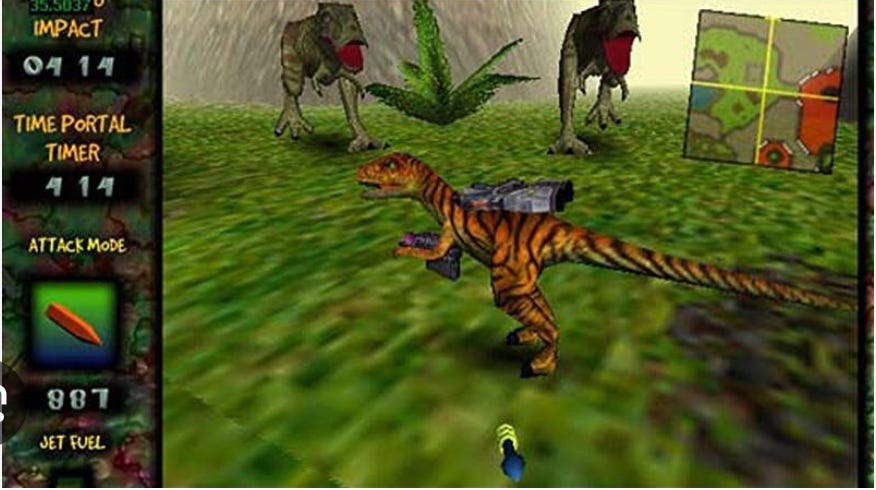
Immediately, Michael demanded I take the game controls from him and save his Nanosaur from the T-Rex’s chasing it. 5
It was 1999, I was thirty-seven, and I was prepared to move seamlessly from my masterful role at work to my role as a savior to my six-year-old son’s Nanosaur.
I bent down to take control over the mouse and keyboard. Right away, I propelled the Nanosaur directly into the path of a T-Rex who devoured me. Michael screamed––a screech worthy of a rampaging Velociraptor. I tried to explain that I didn’t know how to operate the game, but little Michael was not accepting excuses.
I was his father. I was supposed to know how to do things.
Each time I made a Nanosaur die, Michael cried out in great pain as if he were the Nanosaur. Soon, Michael was raging in tears. As I apologized to Michael, I started laughing at my woeful Nanosaur incompetence and the ridiculousness of the situation. My laughter did not land well with Michael.
The Nanosaur incident has become a precious memory, a family legend, and an enduring source of amusement between Michael and me. Michael is now almost 33, and although every incarnation of our Nanosaurs perished, Michael’s confidence in me somehow endured. To my delight, he will still ask for my advice.
WHAT I LEARNED ABOUT BILLIONAIRES AT JEFF BEZOS’S PRIVATE RETREAT
The Atlantic; May 2026. I’ve gifted the article. That said, if you’re going to subscribe to any one magazine, I'd choose The Atlantic.
I recognize that I move through the world with far fewer pushbacks and restraints than most people.
Below, the murdering scene in There Will Be Blood. When raging Plainview declares he’s finished, he means he wants his servant to come and clean up the body and the blood.
The memory of the taste of the prunes leads Ivan to remember other elements of his childhood such as “his nurse, his brother, his toys.” Tolstoy’s prunes, Proust’s Madeleine.
The tiger-striped Nanosaur is a futuristic, highly intelligent species of dinosaur. The Nanosaurs are dying out due to a weakened gene pool. Your mission is to travel back in time to a primitive age to collect five primitive dinosaur eggs in order to save the Nanosaur civilization from genetic extinction.
You are propelled by a jet-pack that when properly used can evade the T-Rex’s that want to eat you. You have twenty human minutes to find the precious eggs and bring them back through the time portal. After twenty minutes is up, a meteor storm will destroy you, destroy the primitive world, and eliminate any chance to save the Nanosaur species.
Coincidentally I am reading Ivan Ilyich right now. I am down to the last pages. It’s a poignant read. And a great cautionary tale.
Thank you David. I’m clearly not a member of the ultra wealthy, but I’ve certainly been self-centered at times and put out by what are essentially minor inconveniences (when the world has too much real suffering). Reading today’s piece made me think of Michael Jackson’s “Man in the Mirror.” I need to work on myself.