


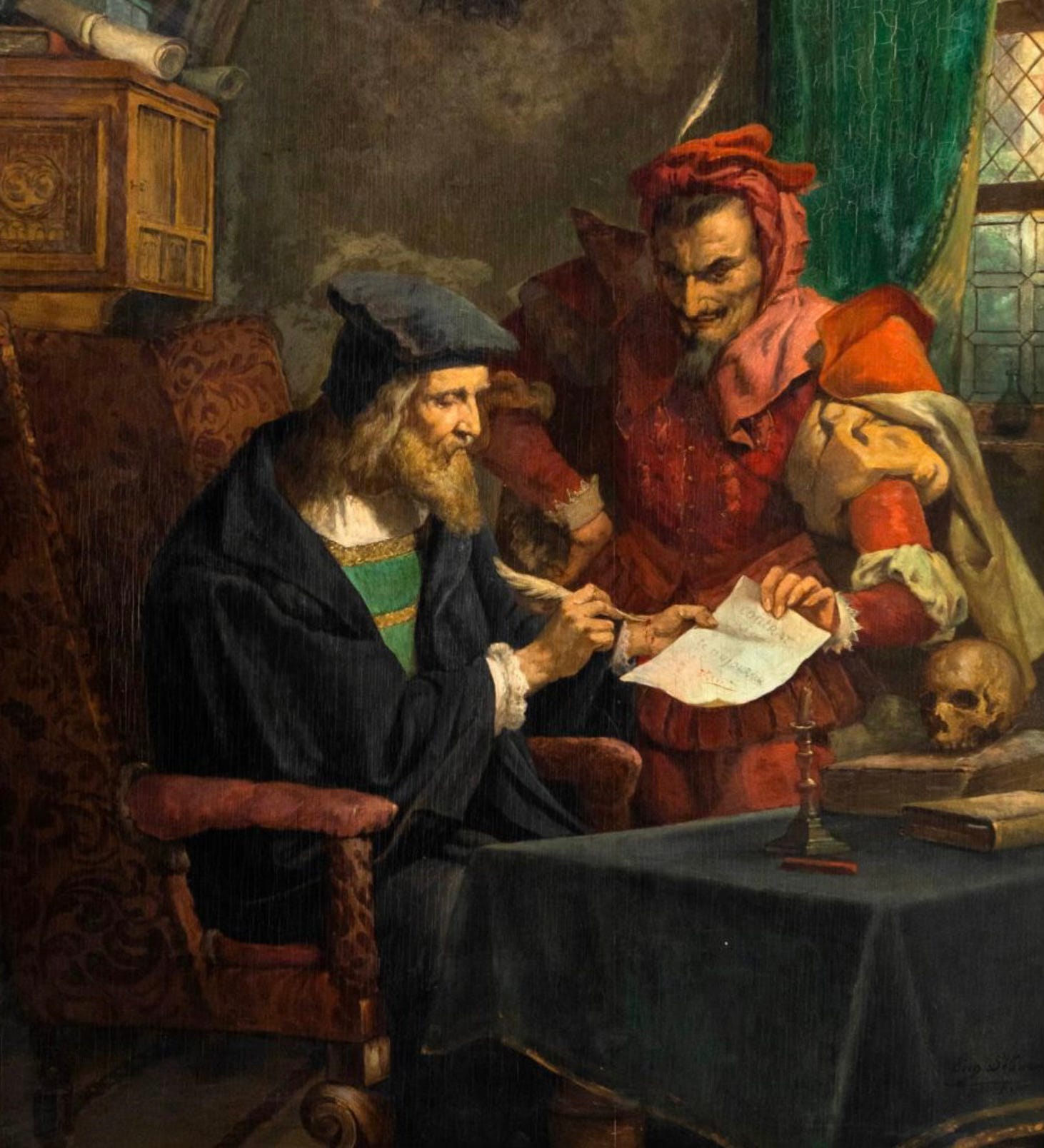
For every fraud and every lie, there must be two parties, that of the scoundrel and that of the victim. Once the victim believes the scoundrel’s initial lies, the victim is often complicit in perpetuating the fraud because it becomes too painful to accept the truth.
I know.
Johnnie Walker hope
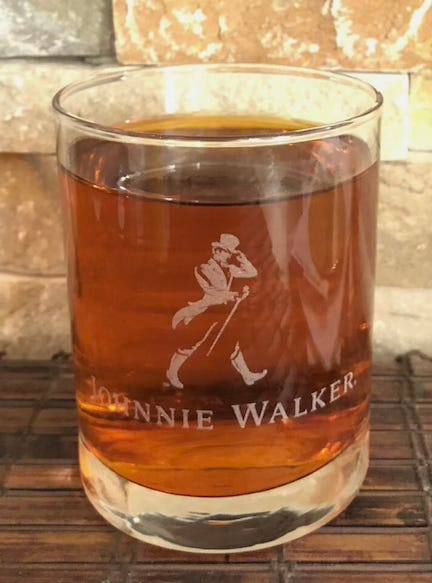
It’s 1999, I’m 37, and I can see myself late at night. My wife and kids are asleep and I’m pacing around the kitchen with a glass––a big glass––of Johnnie Walker in my hand, trying to convince myself I haven’t been defrauded. I shake the glass, but there’s no clatter; the ice has long since melted.
Anne is supposed to call me tonight. I haven’t heard from her for days. Even if it’s another improbable excuse–––bank wire numbers transposed or yet one more layer of approval needed from Exxon –––I need to hear her voice, need to hear her say something, anything about the deal. Any slender thread will do. I need to hang on to the hope that the money will come.
Exxon was supposed to send money to our firm a year ago to buy the pollution credits we own. It’s the largest deal Anne’s arranged for us.
Anne is my age, a cheerful, ruddy faced blonde, a rocket scientist from Cal-Tech who invented the South Coast Air Quality pollution credit market. She has the can-do vibe of an Elizabeth Holmes. Anne and I have done a handful of pollution credit transactions together, all profitable. I’ve been to her offices in Pasadena many times. I consider her a friend.
Despite the long delay and all the improbable excuses, I have not done what would be typical–––yell, threaten, bring in lawyers. Because all along, I’ve believed Anne wanted to pay us. That whatever was going on behind the scenes she was working on our behalf.
Months ago, Anne had faxed the signed Exxon contract to me. It’s on Exxon letterhead and signed by a real, google-searchable executive at Exxon. The contract states unequivocally that Exxon will buy the pollution credits from our firm. I’m bound by confidentiality not to contact Exxon directly. Only Anne can deal with them.
These faxed pages have become my bible, the sacrament of my faith.
The final blow comes in Rome on a family vacation. My daily search on Google yields devastating news. Anne has been sued by another investor. The complaint describes a fact pattern all too familiar to me.
I shouldn’t be shocked, but I am. I can no longer deny that I’ve been defrauded, that the Exxon contract is a forgery. Actually a crude forgery, once I look for the telltale signs.
A week later, while I’m at my ten-year-old son’s baseball game, I finally get Anne on the phone. She confesses to her lies, to her forgery of the Exxon contract. She apologizes with words and tears, and part of me feels sorry for her.
When I tell the firm’s founding partner, he smiles a bit and shakes his head at Anne’s audacity. It helps––a lot–– that the investment is relatively small.
I bring in our firm’s lawyers, and we report Anne to the authorities for wire fraud.
A few months later, I testify to a Los Angeles grand jury. One juror asks how I could have been fooled for so long. He questions why I didn’t just pick up the phone and ask Exxon if the transaction was real.
I cloak my answer beneath the excuse of ethical behavior. I tell him, “I signed a confidentiality agreement. I take any contract I sign seriously.”
The real answer was that I’d been scared to call Exxon, scared to find out for certain that I’d been defrauded. I didn’t want to lose the hope that all could still be well. Against all evidence to the contrary. 1
The expert fraudster’s toolkit
Imagination
Many years later, a friend of mine, an Assistant District Attorney who specializes in prosecuting White Collar Crimes, explains why white-collar criminals can go on thinking that they won’t be caught.
She tells me they have powerful imaginations that enable them to spin up a fantasy world consisting of increasingly improbable contingencies. They convince themselves that this fictional world they’ve created is the reality.
Victims like me not only accept the fraudster’s fantasy world, but we often help build it, because we don’t want to know the truth. We become co-conspirators in defrauding ourselves.
Self-deception
The best deceivers, the masters of it, develop a conviction that their lies are the truth. A liar becomes far more effective when he can self-deceive. He believes whatever he’s saying is the truth. Even if in the course of the same day, he makes diametrically opposed statements.
And the confirmation bias of the people lied to is also a form of self-deception. If it’s willful ignorance of a financial fraud, it has real resource costs. If it’s willful ignorance of a family member’s harmful behavior, it can destroy lives.
But if it’s believing in a fraudulent political leader, it may have no individual resource cost at all and it may in fact be protective of self-esteem.
At least in the short term.
Because the more that the self-deceived victim invests their self-esteem in a false hero, the more crushing the blow when they can no longer sustain the illusion.
Evolution is to blame
It is a truth seldom acknowledged that the ability to deceive is an evolutionary survival skill. 2
If you can cheat and get away with it, then there’s more resources for you and less for your rival. The more subtle the deceiver, the greater the survival flex.
Consider the animal kingdom where the survival of the prey and the sustenance of the predator depends on which is a better deceiver.
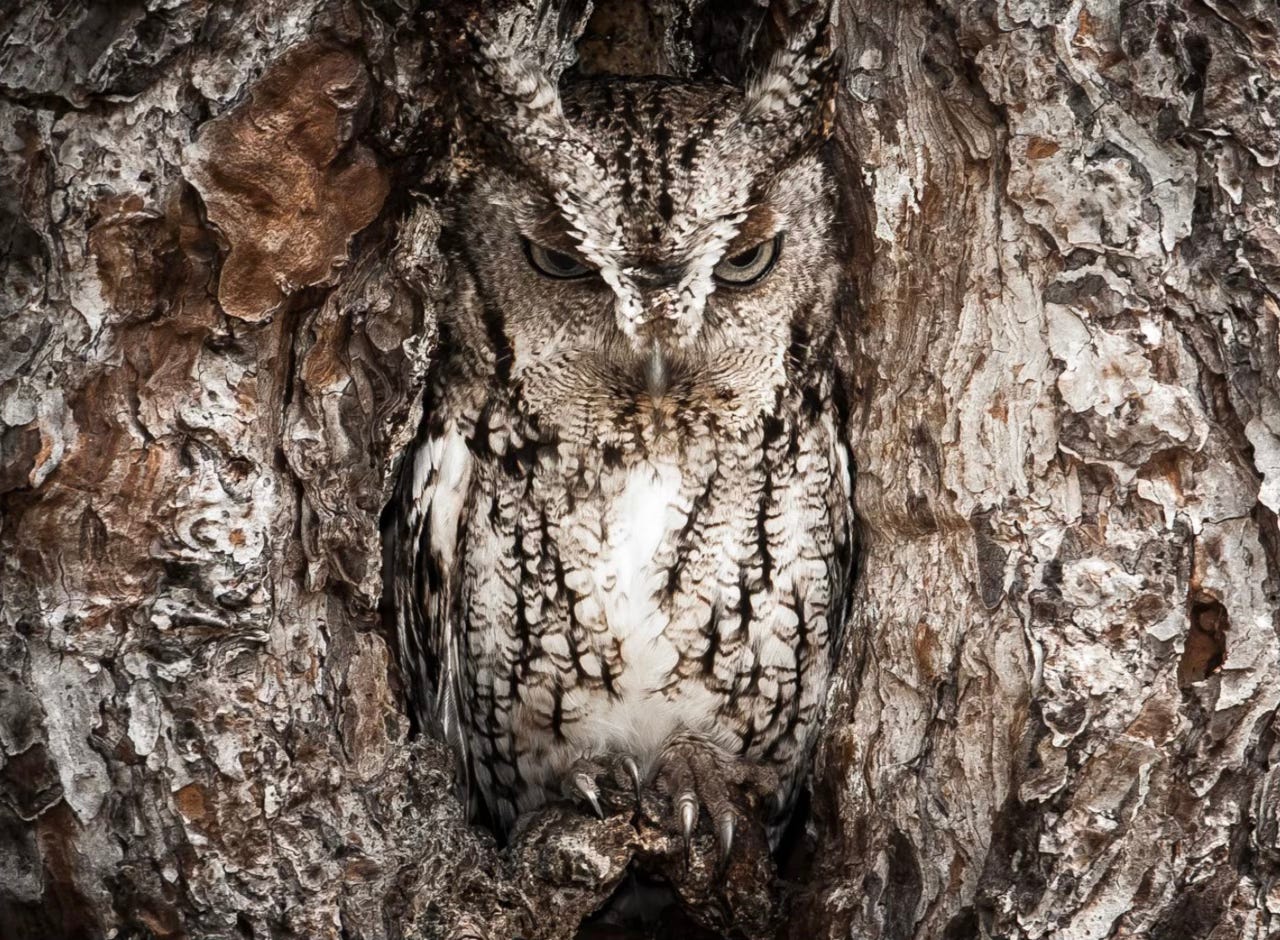
The ability to detect a cheater at the outset is also a survival skill. There’s an entire industry devoted to teaching people how to know if someone’s lying.
There was an underrated TV show in this vein starring Tim Roth as an expert who can detect lying. 3
You can think of it as psychological warfare. The first few lies by the cheater are the most important, like a pre-emptive strike. Because once the victim falls for the initial lies, they will look for ways to avoid admitting that they’ve been cheated.
That’s what happened to me with Anne and the Exxon deal. It quickly became too painful to my pride––how could I have been so stupid––and too adverse to what I wanted––the successful completion of the transaction––for me to admit I’d been duped.
Fraudster hall of fame
One of the greatest literary fraudsters of all time is Augustus Melmotte, the creation of Anthony Trollope in his great 19th century novel The Way We Live Now.
Trollope’s novel and the character of Melmotte were inspired by Trollope’s dismay at how London society had come to venerate wealth without regard to honesty and his further dismay at society’s embrace of rampant gambling on the shares of dubious railway ventures.
When we meet him, Melmotte has swindled investors on the Continent out of a great deal of money. He flees to London where he hopes to bury his past beneath a veil of mystery and use the swindled money to establish his reputation as a great man of finance.
He lives lavishly and garishly, throwing extravagant parties that Dukes and Duchesses attend, giving him the imprimatur of respectability. His spending convinces the London world that he is wealthy and a master investor. Because how else could he afford to live the way he lives.
Melmotte soon takes control of a scheme to build a railway connecting Salt Lake City to Vera Cruz, Mexico. The railway is a fiction. It does not own a single acre of land. It has not laid a single track.
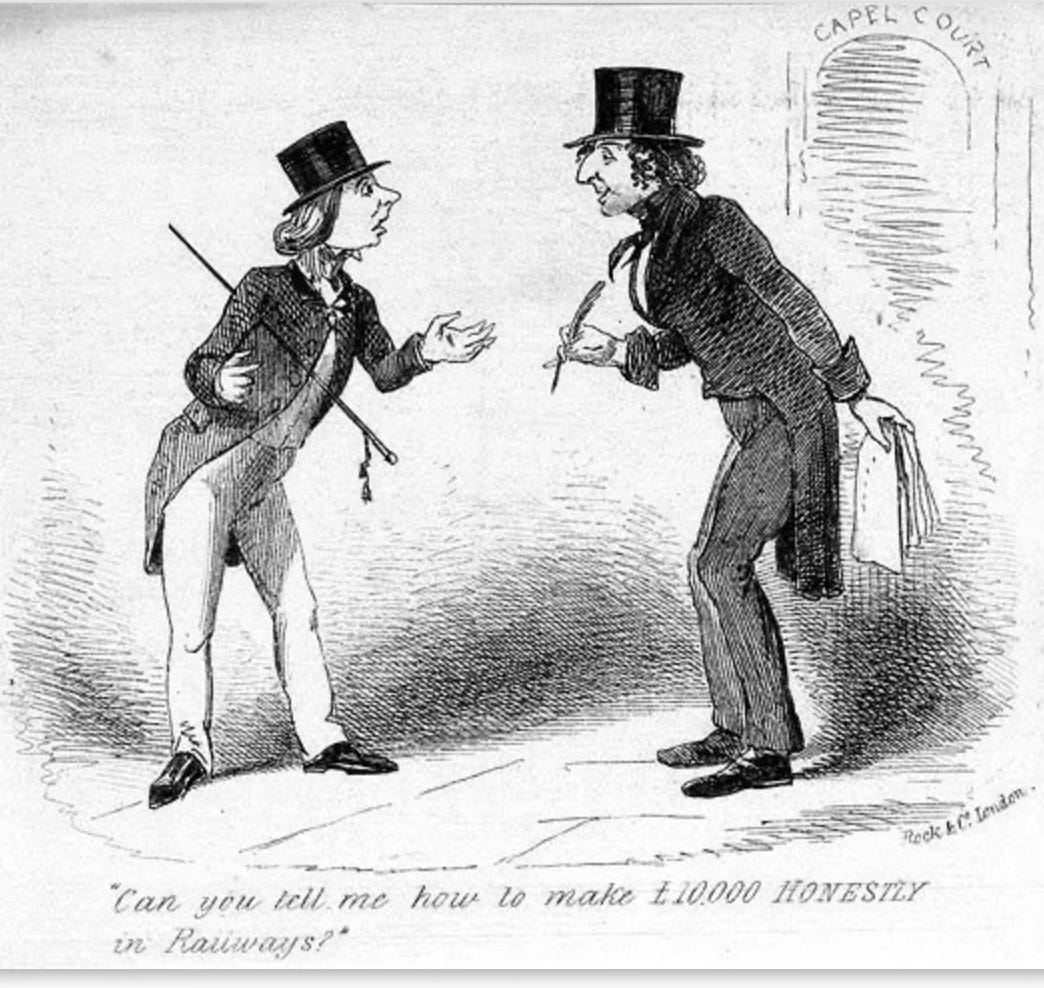
The only reality behind the scheme are colorful brochures and the shares of stock Melmotte sells to investors. Everything else is based on perceptions created by Melmotte’s false confidence, his lies, and his spending.
All the shares are in “Melmotte’s pocket” and every purchase and sale results in cash going to Melmotte. Which he then uses for further personal extravagance, embellishing his reputation as the Great Financier.
He creates a Board for the fictitious railway and seasons it with various members of the minor aristocracy. At one of the perfunctory Board meetings, Melmotte declares:
“I do not know that greater prosperity has ever been achieved in a shorter time by a commercial company.”
As the swindle grows more monstrous so does Melmotte’s arrogance. His “swagger” leads otherwise respectable men to become his toadies, to present their “hinder parts to be kicked merely because [Melmotte] put up his toe.”
Soon rumors catch up with Melmotte. He buys an estate, doesn’t pay for it, and mortgages it to the hilt. He engages in forgery. As lawyers close in, he decides that his only course of action is “brazen-faced audacity.”
He gets himself elected to Parliament and tries to marry his daughter off to the eldest son of a “Marquis.” He convinces himself that these maneuvers will offer protection. 4
Melmotte adopts the mindset that if his “imagination is strong enough,” he can do anything, endure anything. Confidence is everything. The narrative trumps the reality. 5
Eventually, however, reality catches up with Melmotte. It’s a rare 19th century novel that allows the villain to triumph. Financial fraud, after all, is about money and numbers. And like facts, numbers are stubborn things.
The Way We Live Now
Trollope wrote The Way We Live Now in 1875. His London world of rakes and deceivers, of irrational speculation and high hypocrisy, of the murkiness of what is fact and what is fiction, is a familiar one.
Here’s Trollope in his autobiography about what motivated the novel:
“…dishonesty magnificent in its proportions, and climbing into high places, has become at the same time so rampant and so splendid that there seems to be reason for fearing that men and women will be taught to feel that dishonesty, if it can become splendid, will cease to be abominable.”
The words and actions of the swindler and liar Augustus Melmotte echo and rhyme in many of the headlines of our current era.
We could be comforted by the familiarity of Trollope’s world. We could conclude that there is nothing especially rotten in our current state of affairs. That there really is nothing new under the sun.
Or we could be disappointed that 150 years have passed and human morality has made insufficient progress.
Or a third, worse choice. We could be alarmed that humanity is now endowed with unprecedented and awesome tools of mass influence and mass destruction; and yet we remain just as much controlled by our base impulses of deception and aggression.
Question for the comments: What would you say about these three choices?
I wrote a post in 2023 about this incident called How A Fraud Broke My Trust In Myself. However, until now I didn’t fully comprehend the “co-operation” that often occurs between the cheater and the cheated.
The evolutionary biologist who did the most to establish that certain types of both deception and altruism are pro-survival traits is Robert Trivers who died this month. Lionel Page in his Substack newsletter Optimally Irrational recently published a terrific article honoring the work and influence of Trivers.
On self-deception, Page writes this about Trivers:
“In the preface to Dawkins’ The Selfish Gene, Robert Trivers proposed a solution to [deception as pro-survival]: our tendency to self-deceive, to think we are better than we are, may serve as a mechanism that enables us to deceive others more effectively. He wrote:
‘If … deceit is fundamental to animal communication, then there must be strong selection to spot deception and this ought, in turn, to select for a degree of self-deception, rendering some facts and motives unconscious so as not to betray – by the subtle signs of self-knowledge – the deception being practiced.’ —Trivers (1976)
Commenting on this assertion, psychologist Steven Pinker remarked, “This sentence... might have the highest ratio of profundity to words in the history of the social sciences” (2011). “
A certain member of my family, whose name may or may not be Andrew, never appreciated the depth and artistry of this (undeservedly) short-lived TV show and mocked me for liking it.
The aristocrat in the novel holds a Scottish title so Trollope spells it marquis rather than marquess. The rank order of nobility is Duke, Marquess, Earl, Viscount, and Baron. I looked it up.
I wrote about the triumph of narrative over reality in a recent post, Cry Panic! And Binge-Watch Industry.
What a page-turner of a post! I was pacing the kitchen right there with you.
Can we select all of the above? Thank you for this personal, agonizing story. And while it is cowardly to select all three, I wonder if Trump is an anomaly. How did such a gross, lying, despicable man attract enough voters to give him two terms? Certainly not his policies. Does he have any? Not his stature in the world. Our former friends believe Americans must now have our heads examined. Not his intelligence. Recently he rhapsodized over a fountain pen. Wait, I have it. His followers mirror his greed, his callousness, his mental decline. Can they ever wake up? Look in the mirror and say, What the fuck (87 and allowed to swear) was I thinking? We can only pray.