


The marriage of Taylor Swift poses a question of whether it’s possible to remain at the peak of any endeavor and still have a balanced life. Can a superstar like Taylor Swift shift priorities as her situation shifts or will she always prioritize her work no matter what.
I come at this question from a position of being far from the peak of any single endeavor. Instead, I stand on various hills (husband and father) and look up from many valleys, too numerous to name.
So, as a “balancer” who never went all-in on any one endeavor, I have a selfish interest in believing that the answer to my question is no, you rarely if ever can be number one at anything and still lead a balanced life. The requirements to stay at the top are too intense and the seduction of being at the top is so strong that your life and your ambition become the same.
I admire Taylor Swift without being a fan of her music. From what I can tell, she’s a terrific role model for girls and young women. She’s philanthropic, having shared the wealth of her Eras tour with her crew. Coincident with her recent wedding, she donated to many charities, including NYC food banks. Perhaps as penance for shutting down the area around Madison Square Garden. 1
Taylor Swift is top of my mind not only because of her wedding, but also because of my recent literary encounter with Charles Dickens, a different celebrity in a different century in a different field. In his time Dickens was as famous and feted and observed as Swift is today.2
Taking into account the volume of their creative output, including performances, one can say with some confidence that Dickens and Swift share the trait of being obsessive about their work. Like most superstars, Dickens failed to balance his dominant artistic fame with a happy domestic life. I wish Taylor Swift better success in achieving a happy balance if that’s what she wants.
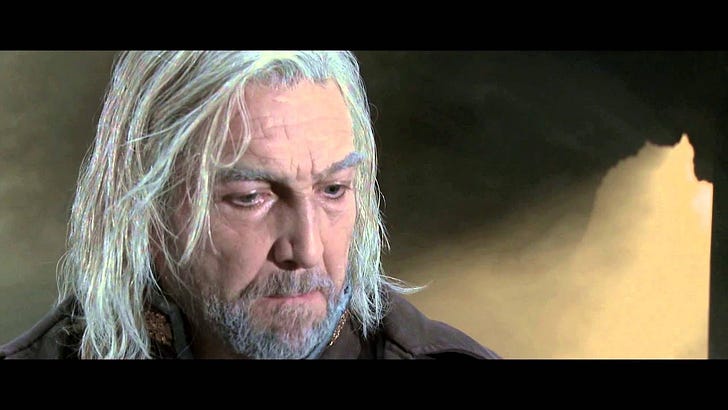
Gloomy Charles Dickens in middle age
I just finished reading Francine Prose’s new novel Five Weeks In The Country in which she creates a version of the historical Charles Dickens from fact, conjecture, and her imagination. This compelling version of Dickens by Prose (what a Dickensian name!) is for now the “true” version imprinted upon my brain.3
Five Weeks in the Country takes place during the disastrous five-weeks-long visit to Dickens’ country home by fellow writer Hans Christian Andersen, a Dane with almost no proficiency in English.
The outstanding feature of Five Weeks in the Country is Prose’s novelistic portrait of Charles Dickens at age 45 in mid-life crisis. By then, Dickens had already been famous for twenty years after his serialized novel The Pickwick Papers went viral internationally. When Prose introduces us to him in 1857, his fame and reputation are at a zenith, yet he is deeply unhappy.
“He had a beautiful house, professional success, a loving family, but he was as morose and distracted as he’d been as a boy…No one expected happiness in a blacking factory, but now with such an enviable life, it was unseemly to be gloomy.” 4
One source of Dickens’ gloom is the fear that the secret of his shabby, impoverished origins will be uncovered––his father’s stint in debtor’s prison, his childhood humiliation working in the blacking factory, his grandparents “working in service.” He worries that he will be discovered as an imposter by the upper-class society whose approval and adoration he craves. 5
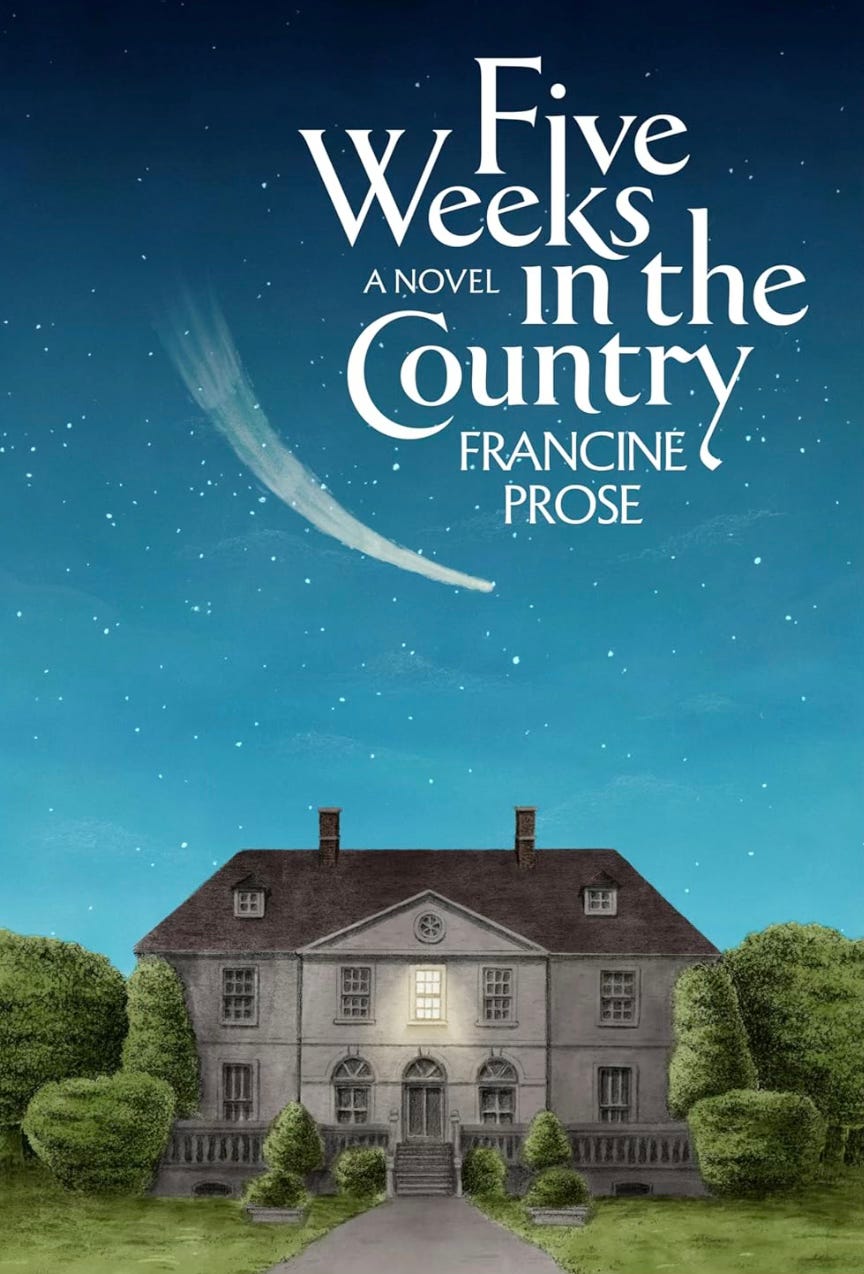
Prose’s writing is so skillful you can forget you’re reading a book. It’s also funny. The humor—mocking and often Nabokovian cruel—is centered on an unintended contest to see who makes the visit of Hans Christian Andersen more terrible, the ungainly and inappropriate Andersen as houseguest or Dickens as the imperious, impatient, and bleak-minded host.
Andersen’s visit begins with him collapsing on the parlor floor, exhausted.
“Watching [Andersen] open his eyes and try to stand was like watching a giant wounded cricket trying to right itself. He used his elbows and knees like crutches to hoist himself onto his feet.”
Over the next five weeks, the visit never gets better.
A family unhappy in its own way
Dickens is a self-admitted failure as a father. He’s dissatisfied with his nine children, ages five to twenty. Dickens’ children must compete not only with Dickens’ expectations, not only with the public whose love Dickens prefers, but also with the many children and young characters who inhabit the world of their father’s beloved novels. Characters who he seems to prefer over his real life kids.
Dickens suffers from the typical invidious comparisons of the self-made man who, in providing his children with the comfort and ease he never had, resents them precisely for what he has provided them. Dickens thinks his children lack “initiative, drive, persistence—-all the qualities that made [Dickens] who he was.” 6
The children feel their father’s displeasure and his distance. When he’s at home with them, he’s often in a “writing trance,” never present in a way that he was when they were much younger and he was less famous.
In Prose’s novel, the children speak in a communal voice:
“Why did someone who writes so feelingly about the powerlessness of children not realize how helpless we felt?”
Much of the gloom of the Dickens household extends from the terrible state of Dickens’ marriage. To the extent Dickens pays attention to his wife Catherine, it’s to show his annoyance when she interferes with his work.
By 1857, Catherine had gone through ten births (one baby died), and Dickens has decided that she is stupid, dull, and fat. Dickens never got over his platonic love for Catherine’s younger sister Mary who died at the age of seventeen in 1837. Twenty years later, around the time of the novel, Dickens decides “to save his life” by leaving Catherine for an eighteen year old actress, Ellen Ternan.
Dickens the workaholic
When we meet Prose’s 1857 version of Dickens, he considers himself a “sad old man.” He’s unwell from working too hard. He suffers from sharp, recurring pains in his side and on his face. As well, his eyesight is shot.
“Black spiders crawled across his visual field, his punishment for writing for so many hours in flickering, feeble light.”
Dickens’ memory of past happiness pains him and the only way he can stop the pain is by working so hard he can think of nothing else. But even his work threatens him. He’s jealous of his own characters whose lives he makes so eventful while his own life seems like a prison he can’t escape.
His envious wish is to make the characters who spring from his mind unhappy at the end of his stories. “Happy endings sicken him,” because his own happiness is elusive. But he knows what his public demands. 7
”Denying [his]readers a satisfactory ending was like refusing a child a slice of birthday cake.”
His prodigious writing is bad enough in terms of obsessive work. But Dickens also has a grueling schedule of live performances, reading his novels and acting in the plays he’s written. During the time of the novel, Dickens is trying to lose himself rehearsing an acting role he created of a jealous lover. 8
“He would practice his soliloquy until he was no longer himself…until he was no longer an overworked writer and the father of so many children, until he no longer fell in love with every young woman he met, until he forgot that he was a dissatisfied husband and father and now the host of an eccentric houseguest who spoke no English.”
That sums up Dickens’ misery nicely. He continued his mad schedule of writing and performing until he succumbed to his illnesses thirteen years later at the age of 58.
Who benefits from great talent
A similarity between Charles Dickens and Taylor Swift is that the information generated about each of them is so voluminous that it’s difficult to pick this letter of Dickens or this song of Swift’s and say this is the true Charles Dickens or this is the true Taylor Swift. Perhaps every fan has their own “true” version.
We do know, however, that Dickens worked himself to death. His readers were impatient for the next installment of his serialized novels. His performances in England and America were sold out. And when he performed, he usually acted out the most dramatic scenes of his novels, the ones that exhausted him physically, e.g., the murder of Nancy by Bill Sikes in Oliver Twist.9
Dickens sacrificed himself and perhaps sacrificed much of his happiness to his work. Hundreds of millions of us are the beneficiaries of that sacrifice.
Creators are naturally envious creatures. But it’s hard if not impossible to think of any creator envying Prose’s version of Dickens.
Instead, we envy the carefully curated images of celebrities without knowing what their true lives are like to them. And even if we could know the truth, would we really want to? We need our myths and role models.
Because beneath the curated images, when the reality is revealed, so often we find pain and insecurity and distress. Perhaps those are the natural accompaniments of successful creative obsessiveness.
Great talent is more a gift to the public than it is to the artist.
The title of this essay, High Flying Adored, is a song I love from Evita, one of my favorite plays. It’s about the life of Eva Peron who in the 1940s rose from an undistinguished background to become the First Lady of Argentina at age 26 beside her dictator husband Juan Peron. Eva died at age 33.
High Flying Adored are words that could describe Charles Dickens or Taylor Swift.
“So famous so easily so soon is not the wisest thing to be.”
New York Times; 7/2/26; Taylor Swift, Travis Kelce donate $26M to several charities ahead of wedding.
“Charles Dickens was sufficiently beloved by American readers that when he got his hair cut during a visit to New York City in 1842, admirers flocked to collect clippings from the barber.”
From The Atlantic; The End of Reading Is Here by Rose Horowitch; July 8th, 2026.
Five Weeks in the Country by Francine Prose is evidence that the death of innovative, entertaining, and well-crafted contemporary literature is a false rumor.
Dickens was well known for naming characters after their most salient feature so he would appreciate a book about him by a writer named Prose.
Quoted from Five Weeks in the Country as are all subsequent quotations.
Dickens’ inauspicious origin story was kept a secret until after his death.
This is one parental trap that someone who grew up with wealth should be able to avoid. If this is a topic of interest, here’s a post I wrote about it.
My two cents about my inheritance
My wife Debbie and I needed to decide how or whether we might share our wealth with our adult children. To guide us, we had the good and the bad of my experience having received family money.
I hated the ending of Great Expectations where everything is wrapped up so prettily. I then found out that Dickens’ original ending was not so happy. But Dickens was encouraged to make the ending a happy one for the benefit of his readers.
Francine Prose may have been thinking about Great Expectations when she wrote the line about most readers needing their slice of birthday cake.
Dickens never releases himself from his writing. He’s always looking for content. In Prose’s novel, when Dickens initially meets Hans Christian Andersen in 1847, Andersen tells him a tale about wood from a coffin later used to make a cradle. Dickens “clocks” this and then uses a message carved in wood as a plot device in the play The Deep Freeze, which he was rehearsing during Andersen’s visit.
In Jane Smiley’s excellent short bio-essay on Dickens—Penguin Lives Series, 2002—she notes that Dickens “often gave people the impression they were being ‘scanned’ [for material].”
In 1869, the year before he died, his doctors gave him this prohibitionary certificate, agreed to by Dickens, but then not followed:
“’The undersigned certify that Mr. Charles Dickens has been seriously unwell, through great exhaustion and fatigue of body and mind consequent upon his public Readings and long and frequent railway journeys. In our judgment Mr. Dickens will not be able with safety to himself to resume his Readings for several months to come.”
Quoted in John Forster’s 1875 biography from a letter he received from Thomas Watson, Dickens’ senior doctor at the time.
From that same biography:
“The second portion of the [performance] opened with the New Year [1870], and the Sikes and Nancy scenes [in Oliver Twist], everywhere his prominent subject, exacted the most terrible physical exertion from him.”
What always strikes me most about Dickens's personal life is neither his genius nor misery. It's what happened to Catherine. Ten births over twenty-two years, and her reward was to be characterized by her own husband as unstable and unfit, so that he could secure a legal separation. She, on the other hand, kept his old love letters and asked her daughter to show them to the world one day.
Meanwhile her younger sister, Georgina, moved into the house, stayed on as Dickens' housekeeper and confidante after the marriage collapsed, helped raise Catherine's own children, and was later named an executor of his will. Catherine was replaced inside her own home, by her own family, and erased out of the life she had built.
I'm looking forward to reading the Prose book, definitely, but maybe someone should write Catherine's story too!
I love this post David! (And especially the title from my all-time favorite musical). I always think of Dickens as the first real celebrity, with a tour schedule, people waiting for him outside his hotel, and mass hysteria over his latest release (and he and Taylor are both known for being extremely prolific).
One difference is Dickens’ extremely unhappy and unsupported childhood, as you’ve mentioned. It seems that Taylor has a very supportive family, which makes a huge difference in self-esteem and ability to form genuine relationships in adulthood.
I do wonder for her though - what could possibly come next? Maybe she doesn’t see it that way. It does seem she’s gearing up for an Oscar nom for the Toy Story song. But I wonder if she will have an “Alexander wept as he had no more worlds to conquer” moment.