


I wrote the post below in the summer of 2023, trying to understand the continued appeal of Trump through the lens of Willy Loman in Arthur Miller’s great play Death of a Salesman. Trump was then out of power––permanently I thought––so I found it relatively easy to be analytical and gracious to Trump supporters.
This week I was full of rage, contempt, and astonishment. Not a good place from which to write anything useful to me or to you.
I found solace, however, in revisiting my old post and my fictional friend Willy Loman. Willy believes whatever he needs to believe in order to make his world make sense. Willy clings to his delusions because the truth of his life is too disappointing, too painful to accept.
To varying degrees and about various things, there’s some of Willy Loman in all of us.
My post also reminded me that great literature is timeless in both its artistry and usefulness.
Here’s the post as originally published.
Willy Loman in the age of Trump
June 2023
This weekend, in one of my bookshelves, I came across Arthur Miller’s late 1940s play, Death of a Salesman. It was a chance encounter, the best way to renew a relationship with an old friend.
The play’s main character Willy Loman is an elderly man thwarted by the failures of his life, a result in part of his own choices, but due more to vast and impersonal forces outside his control. Willy is in extreme despair, and it is a cold heart indeed that does not share vicariously in the sorrow of Willy’s plight.
I hadn’t seen or read the play for at least a decade, and this time I took away something new, something relevant to our current times. An author/playwright has no bounds about revealing the inner life and mind of their characters, and a great one like Arthur Miller can do so with an artistry and exactitude rarely if ever met in real life.
So, I’m certain had Willy lived today, he would have been a die-hard supporter of Donald Trump. I’ve always felt a keen empathy toward Willy, and seeing him through this prism of politics in 2023 has deepened my understanding of the vast swath of my fellow citizens who covet the return of Trump to the Presidency.
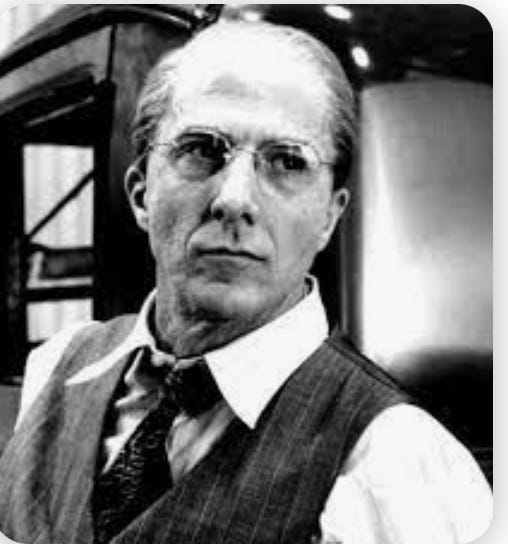
I’m a believer in the free market. And so, in the winter of 2020 when the question was posed to me whether I’d vote, hypothetically, for Elizabeth Warren or Donald Trump, I hesitated for a beat. My questioner, someone delightfully free with expressing his views to me, was not pleased by my hesitation and declared that a voter for Trump was either “ignorant” or “morally bankrupt” and invited me to place myself in one or the other category.
However, even after all that’s happened, I refuse to think of Trump voters in such all or nothing terms. I think many of them are very much like Willy Loman, thwarted in their lives and looking for someone, anyone, who they think understands them and will fight for them. Trump gives them hope, if not for improving their lives, for at least wreaking havoc on a system and on the people they think have failed them. The same people who look down upon them and ridicule them.
Willy Loman is an elderly salesman in late 1940s Brooklyn. Twenty years ago, his house was more country than city with trees nearby and a clear sight of the sky. Now the city has come for him in the form of looming apartment buildings that surround his house and block his view.
Willy has been peddling his wares for a company up and down New England for his entire career of three and a half decades. He’s married and has two grown sons in their thirties. Willy had placed all his hopes in his elder son Biff who in high school was the charismatic football captain, good enough at the sport to win college scholarships.
As the play begins, we learn that Biff, home for a visit, has been a disappointment, having failed to fulfill any of Willy’s hopes. At the same time, Willy’s identity as a salesman is fading. He was never a great success but was able to make a living at the cost of great physical strain (his sample cases are heavy things to lug around.) Willy’s sales have dwindled to nothing. His salary has already been taken away and now Willy’s boss, the son of the founder, fires Willy. The firing happens as the boss plays with and marvels at an expensive new machine he’s purchased that can record his little daughter’s voice. The technology of the machine is far more valuable and interesting to the boss than Willy, who is disposable, a liability.
All of Willy’s years of service humping his heavy sample cases hundreds of miles across New England have provided no protection from the cruel math of the marketplace. Willy has no union, no pension, no severance, no loyalty from the company he’s served for his entire career. He’s essentially a gig worker, cast adrift when he’s reached the twilight of his usefulness.
Willy is mentally unstable. He frequently slips out of the present into a past remembered by him as a golden age. That mythologized past is Willy’s refuge from his current troubles. I’m sure he would have heard in Trump’s rants a promise to restore that past. And he would have grabbed onto that promise, despite it making no logical sense. He would have grabbed onto it because it would have given him hope.
In the past, Willy was an extreme optimist, convinced that his life and his family’s life would ascend. He and his sons are constantly expanding the house using their physical strength and their know-how with tools. And Willy instills in his sons that the key to success is being well-liked. It’s the elder son Biff with his football stardom, his scholarships, and his throngs of admirers, in whom Willy places all his hopes and dreams.
But Biff flunks senior year math, his scholarship’s at risk, so he travels to Boston to seek advice from Willy. There he catches his father committing adultery. Totally devastated. Biff forgets college and flees home to go out West, “giving up” on his life. Over the next fifteen years, Willy is oppressed by guilt and remorse for which he has no outlet. (Willy might have seen in Trump a fellow adulterer, no worse for wear.)
Despite his oppressive present life, Willy still has occasional bouts of wild optimism that Biff will come through if only Willy can give him enough money to start a business. Willy sees his life insurance policy as the only viable source so Willy kills himself, not knowing that the policy will be voided by his suicide. Another bad choice where brawn and charisma are no substitute for reading the fine print.
Willy’s is a death of despair. He can find no hope for himself alive. No dignity. He’s not a bad man. But he makes a few choices that are bad enough to crush his spirit. He sees others succeeding around him, both his contemporaries and his son’s. And he lacks any coherent narrative to explain to himself why that should be. The quintessential nerd neighbor who as a boy carried Biff’s cleats is now a lawyer off to argue a case in front of the Supreme Court. Willy’s impressed, but baffled.
Would Donald Trump have given Willy a narrative, false as it might be, to prevent his tragic end? I’m intrigued that the answer might be yes.
In any event, those of us who have thrived in our modern world, or at least not been its victims, would do well to understand the despair behind so many of those who support Trump. And reading Death of a Salesman or watching one of the great filmed versions of it might be a start to that understanding.
I turn to Goya’s Black Paintings, created by a deaf, isolated old man on intimate terms with war, cruelty and grief. I particularly love his almost abstract dog stranded on what looks to be a mountain of quicksand. The sky is on fire. A faint gleam in the dog’s eye suggests he hasn’t entirely lost hope. This painting tells the truth about desolation but also about the unquenchable will to keep on going, which the artist embodied.
Your posts referencing the arts are a great reassurance for me because someone out there values the same references that I do. What texts do I turn to? I am reading a lot of history. I just finished a trenchant essay on Thucydides’ Melian dialogue and another comparing Clausewitz’s theory of war with Aquinas’s just war theory. The background gives me a framework. Beyond that, O’Brian, Jane Austen and the Anne of Green Gables books.
I do not think that Trump would have given Mr. Loman a rationale. Why would he pay attention to aiding what he would consider a broke, aged loser? He got the man’s vote. That served his purpose. What remains is selling the paid off house to a private equity firm and hoping his wife doesn’t consume too many resources. For Trump, Willy Loman is Kleenex. Time to flush.