


In 1997, shortly before the Monica Lewinsky scandal broke, I attended a small gathering for Bill Clinton in our host’s apartment at The Dakota.1 There was a mix of Hollywood celebrities and finance people like me.
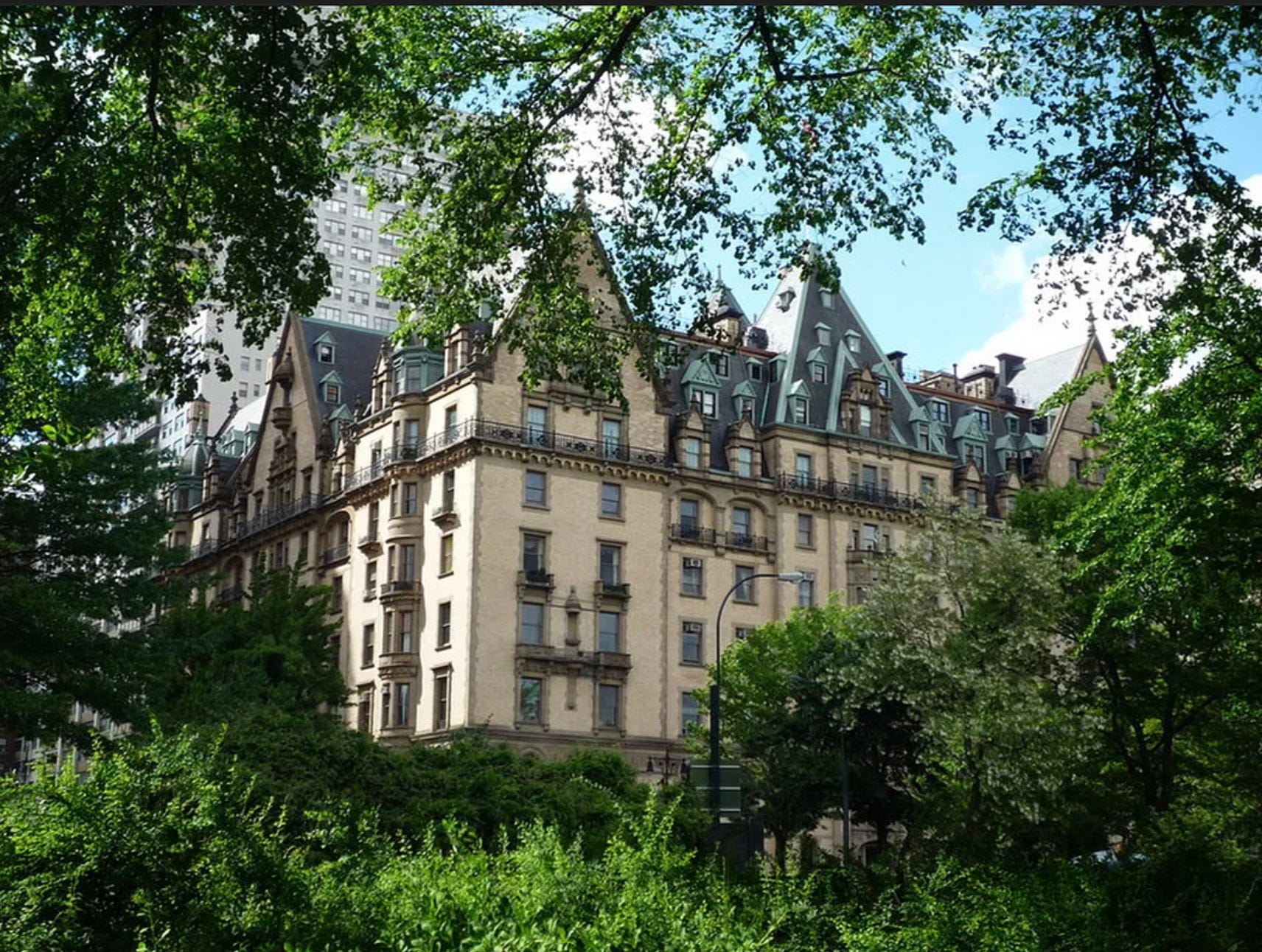
When Clinton entered the room and began to speak I understood that I was witnessing the power of charisma. The combined wattage of the actors and actresses was no match for Clinton’s star presence. Like a charismatic black hole, he sucked up all the attention, even while knowing he was about to be disgraced by the scandal.
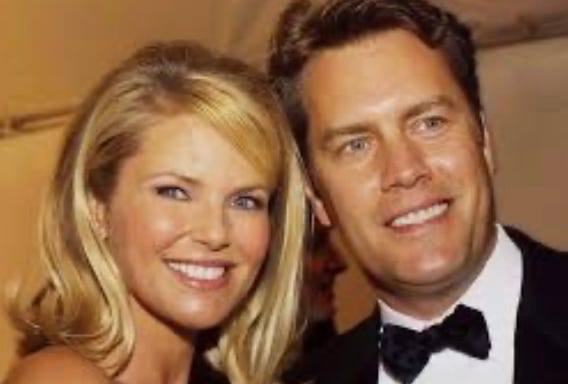
The price of admission that evening was a $5,000 political contribution. When it was over and I was downstairs looking for a taxi, Christie Brinkley, supermodel and actress, asked me if she could borrow my phone to call her driver. There are few certainties in life but it is certain that the loan of my flip phone made a greater impression on me than it did on her.
She was with her fourth husband Peter Cook who she ended up divorcing after discovering that he had cheated on her. But that evening outside the Dakota I was dazzled by their powerful smiles and preternatural good looks. The perfect couple.
The book that sparked my thoughts on varied encounters with fame
This week I spoke with a. natasha joukovsky about her new novel MEDIUM RARE, which was inspired by the tragic tale of Icarus who managed to fly with wings of wax. However, Icarus did not heed his father’s warning about what would happen to his wax wings if he flew too close to the sun. 2
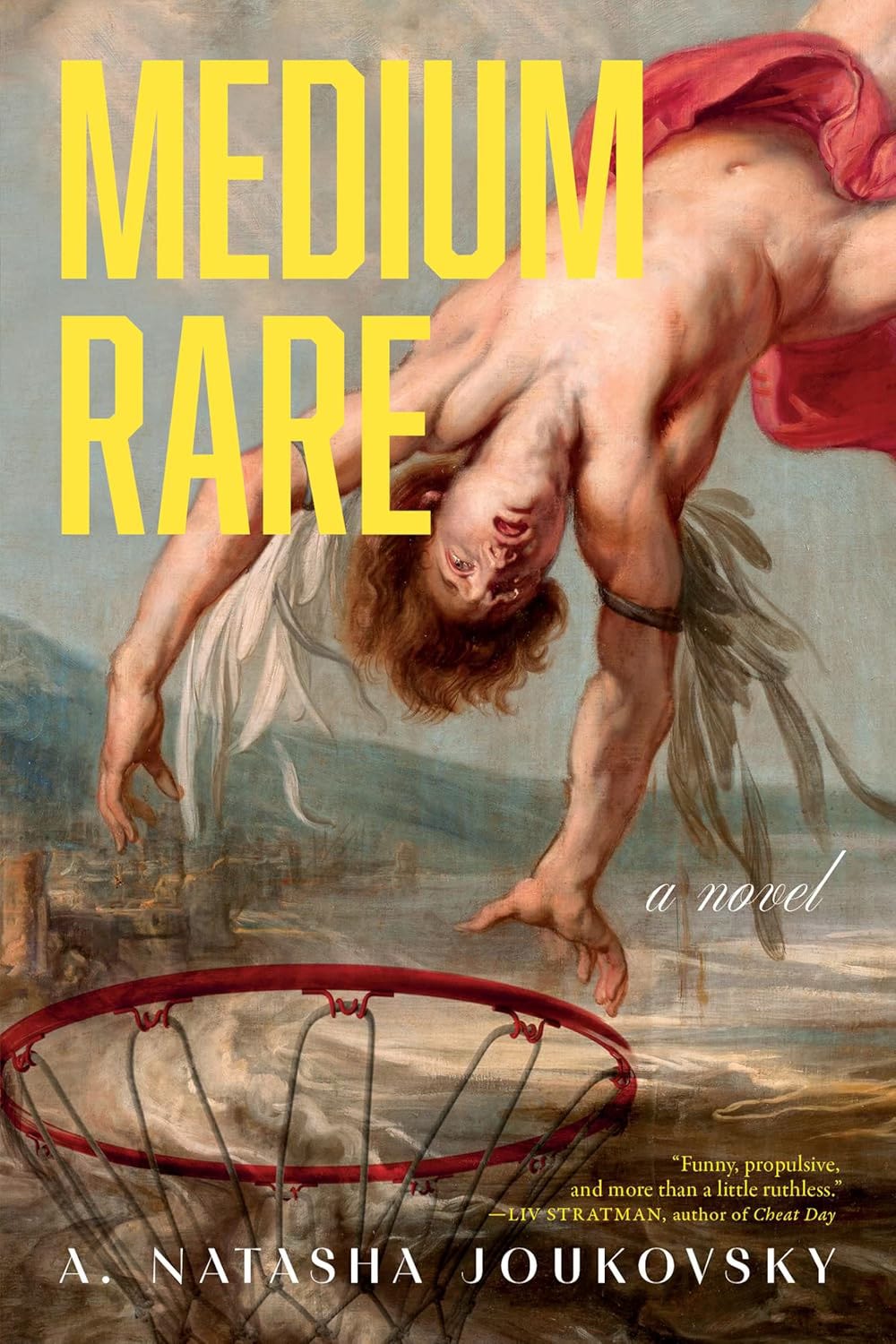
In MEDIUM RARE, the role of Icarus is taken by a “mid-level” Washington lobbyist named Phil who achieves sudden and “stratospheric celebrity” when he fills out what may be a perfect bracket for the NCAA March Madness tournament against odds of one in multiple billions.
Phil’s bracket selection feat is the quintessential route to celebrity for our gamified modern times where media amplifies all sorts of random and frivolous accomplishments out of proportion to their difficulty, daring, and virtue. Think of any professional influencer.
The novel’s narrator is Cassandra, a seer like her mythic namesake and a contemporary of Phil and his wife. Cassandra comes from a higher social stratum than Phil and her unfiltered observations about Phil’s pedestrian tastes are delightfully and ruthlessly snobby.
MEDIUM RARE comes out March 3rd in time for March Madness. I loved it. You can pre-order it here––pre-orders have an outsized influence on a book’s success.
A dance of fame at a power lunch
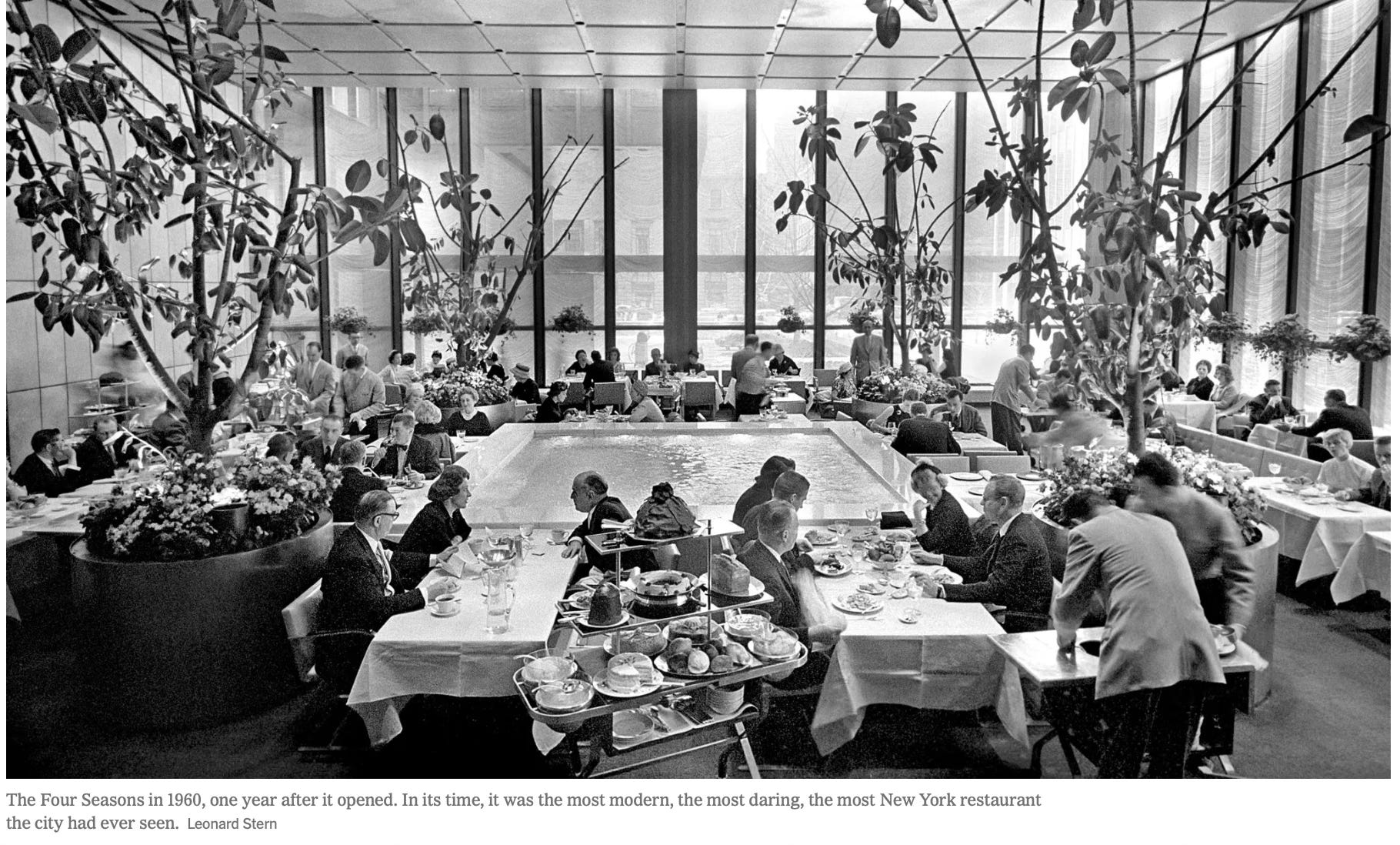
Before it closed in 2016, the Four Seasons Restaurant Grill Room was the place for a power lunch. In my forties, I grew to love that restaurant. I became a regular and had an account linked to my credit card so all my lunches would be charged automatically. Leaving without the check ever appearing at the table was a power flex.
Instead of the Grill Room, I preferred the Pool Room, which I thought was the most aesthetically glamorous room in the city. The picture of the Pool Room below is from 1960.3
Years before I became a regular, circa mid 1990s when I was about 35 years old, I recall having lunch in the Grill Room with two power players–––the consiglieri to a famous billionaire (being a billionaire then was something special) and John Angelo the founder of the firm where I worked. John had taken me along to pitch the consiglieri on an investment fund.
When the lunch was over, I walked directly to the head of the stairs ready to descend. But I had to wait.
The consiglieri and John were just beginning to perform their individual power dances weaving back and forth among the Grill Room tables of other power players, shaking hands, smiling, laughing. They bounced from one power table to the next, and I could see their faces were flushed with pleasure.
As I watched them, I wondered who would triumph, who could dance the longest, who between John and the consiglieri was more known and knowing. Who in this room was more famous.
John finished before the consiglieri. I consider that to be to John’s credit. He had things to get back to at the office and so, taking me with him, he sailed on.
Fame at the bar in Cheers
Fame among a tightly-knit group of people is not confined to a particular social or economic class. The regular patrons of a working-class bar would experience a pleasure similar to John and the consiglieri in the Grill Room at being known by other regulars in the bar. Like the bar in the TV show Cheers, “where everyone knows your name.” 4
I feel a sense of self-satisfaction when I see someone on the street who I know well enough to stop and chat (fans of Curb will know what’s in the footnote).5 It makes me feel known and knowing and reminds me that despite its size, New York City is my neighborhood, a place where I belong.
Stratospheric fame
Then there’s the stratospherically famous---think immediate identification by a single name. As Natasha and I discussed, such fame attracts parasitic sycophants who never disagree with their celebrity “host.” That lack of critical pushback makes the celebrity intellectually lazy to the point where they can lose their perspective. Unlike good basketball players, they don’t know where they are on the court. And that can lead to all sorts of mistakes and disasters.
We also noted how outsized fame and success in one field can mislead a celebrity into thinking they can transfer their success to other, unrelated pursuits. Phil in MEDIUM RARE, overly lauded for his luck in picking winners of basketball games, begins to think that he can apply his “skills” to media and politics.
Elon Musk and other tech billionaires have proven themselves to be brilliant and lucky entrepreneurs. Because of that success and because of their vast wealth and fame, we tend to pay attention to their views on all sorts of matters. But instead, we really should be downgrading those views and be skeptical of their ability to think clearly given the defect of being surrounded by people who constantly stroke their ego.
Celebrity fame that repels good people
There’s an adverse selection process at work in who courts the company of the celebrity. Most of the people who thust themselves forward view getting close to a famous person as a chance for money and reflected power and glory. (See the movie Lurker.)
Natasha and I feel the opposite.
We have both had the experience of being a good friend with someone before they were famous. Once that fame was achieved, we became hesitant about being overly familiar with our now famous friend. We questioned the purity of our motives and also recognized how much busier our respective friends had become. Probably unfair to our friends who more than ever need to be with people from “before times” who will act “normally” with them.
Fame that robs you of your humanity
Vaclav Havel, the brilliant intellectual who became president of the Czech Republic, was uniquely able to self-reflect about his fame and power. In a 1991 speech, Havel examines what was happening to him because of all the perks he enjoyed thanks to his position.
His dentist comes to him, he never goes shopping, he is in the “world of VIPs who gradually lose track of how much butter or a streetcar ticket costs, how to make a cup of coffee, how to drive a car, and how to place a telephone call.”
The celebrity loses control of their life, becomes trapped by their very celebrity, by “its exigencies, consequences, aspects, and privileges.”
In a beautiful summing up, Havel says that, ultimately, the celebrity “is transformed into a stone bust of himself. The bust may accentuate his undying importance and fame, but at the same time it is no more than a piece of dead stone.” 6
Celebrity fame that obscures art
In our discussion, Natasha referenced a Substack essay she wrote called “Fame’s Inflection Point.” An inflection is reached when a person’s fame becomes so powerful and intrinsic that it overshadows anything extrinsic that they produce.
Natasha may have been wrestling with her novel MEDIUM RARE when she wrote:
“As more and more people desperately try—and succeed—to pass fame’s inflection point, doing so seems to become both more existential and meaningless than ever. This is the labyrinth I’m currently stuck in, trying to build some wings.” 7
A video clip
Below is a 13 minute excerpt from my LIVE with Natasha this past week where we spoke about fame and celebrity as it related to MEDIUM RARE and beyond.
The full LIVE can be accessed here. 8
Question for the comments: Despite what I write above, I am intrigued by celebrities for no good reason other than they are famous. What about you?
The Dakota is famous as the setting for the classic horror movie Rosemary’s Baby and for being the home of many well-known people including Yoko Ono and John Lennon who was murdered outside The Dakota in 1980.
If you’re a horror movie fan at all and have never seen Rosemary’s Baby, I strongly recommend it. Brief trailer below.
I wonder if Nabokov was thinking of Icarus when he opened his poem in Pale Fire with the lines:
“I was the shadow of the waxwing slain
by the false azure of the windowpane;”
NYT article about the restaurant’s closing.
John Angelo’s wife Judy is a songwriter and co-wrote the lovely theme song for Cheers, “Where Everybody Knows Your Name.”
Curb Your Enthusiasm immortalized the Stop and Chat.
Fame’s Inflection Point on Natasha’s Substack, quite useless.
My wife Debbie noted the demon-red color of my face in the LIVE video and disclaims all responsibility for my appearance. She did not check me out before I went LIVE. That will not recur.
The main horror of “Rosemary’s Baby” is that in the 1960s an unemployed actor and his wife could afford a big apartment in the Dakota.
I read pieces like this with an anthropologist’s eye. I love to read about how people live in different cultures and reading about the lives of the rich/famous/powerful is every bit as interesting as reading about a hunter-gatherer tribe in Papua New Guinea.
I am always surprised at how important status is in some cultures — not just the desire to have a decent reputation amongst the people who know you, which is probably universal — but some sort of recognition that doesn’t involve respect so much as it involves one-upping others in specific ways that people outside the bubble would not even realize was a thing.
Are there people with wealth who simply ignore status, I wonder? I’m not in a position to know.